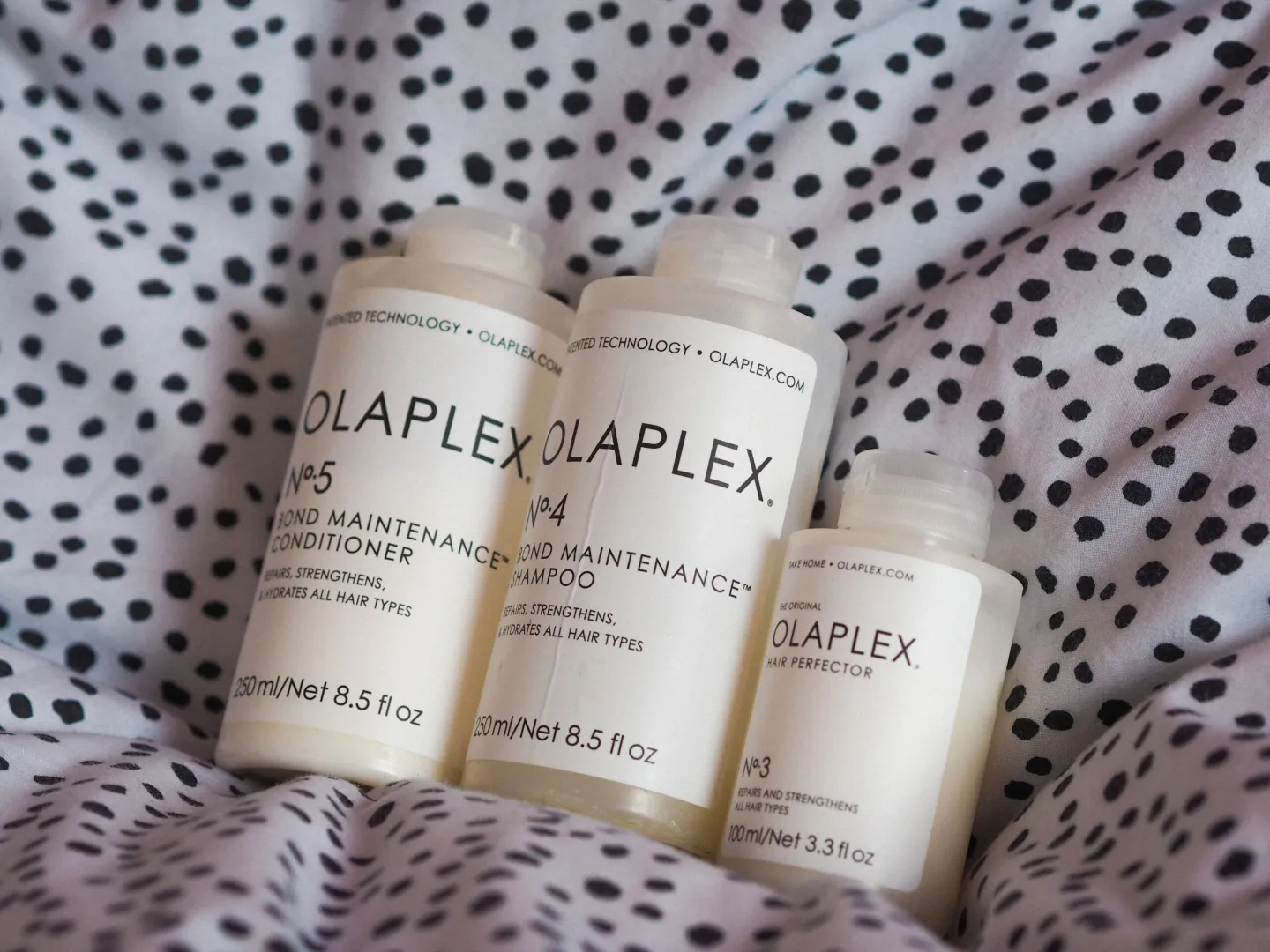
My Olaplex Hair Experience
The short answer: Olaplex works. But it works differently than most people expect — and using the wrong product, or the right one the wrong way, gets you nowhere fast.
After testing the full Olaplex line on bleached, highlighted hair over four months, here is what you need to know before spending a dollar on it.
How Olaplex Repairs Hair — The Science Without the Jargon
The active ingredient in every Olaplex product is bis-aminopropyl diglycol dimaleate — a patented molecule with legitimate peer-reviewed research behind it, not just marketing copy. The concept is straightforward once you understand what happens inside a strand.
Hair gets its tensile strength from disulfide bonds inside the cortex — the structural interior of each strand. Bleaching, chemical coloring, and perms break those bonds. A heavy bleach session can break thousands of them in every strand. That is what creates the brittle, snapping, gummy-when-wet texture that follows aggressive color work.
Olaplex’s molecule finds the broken ends of those disulfide bonds and reconnects them. This is repair at the structural level — not coating, not conditioning, not moisture. The mechanism is why results compound over time. More applications equal more bonds reconnected, not a surface treatment that washes out after a few shampoos.
Why Bond Builders Are Different From Everything Else in Your Routine
Protein treatments — like Aphogee Two-Step Protein Treatment ($20) — deposit hydrolyzed proteins onto the outer cuticle to temporarily reinforce the strand surface. They fill gaps, reduce porosity, and add body. Useful. But none of that reaches the interior cortex where structural damage actually lives.
Deep conditioners and masks work through moisture, fatty acids, and ceramides — essential for softness and manageability, but not structural repair. The words “repairing” or “strengthening” on a conditioner bottle almost always mean cuticle-level conditioning, not bond rebuilding.
Bond builders are the only category addressing actual disulfide bond breakage. Olaplex commercialized the approach in 2014. Competitors like K18 — which uses a bio-mimetic peptide targeting different bond types — and Redken Acidic Bonding Concentrate — a citric acid-based system — followed with their own interpretations. Different chemistry, different mechanisms, meaningfully different results for different damage profiles. They are not interchangeable.
Who Actually Gets Results From Olaplex
The strongest candidates: hair that has been bleached, highlighted, color-corrected, relaxed, or permed — especially more than once. The more aggressive the chemical history, the more dramatic the improvement tends to be.
Hair damaged primarily from mechanical stress (tight ponytails, rough towel-drying) or moderate heat styling shows more modest results. Heat damage disrupts hydrogen bonds and denatures proteins more than it breaks disulfide bonds — a different problem. Olaplex still provides some benefit, but it is not doing its most targeted work.
If your hair has never been chemically processed and you use heat tools occasionally, you probably do not have significant disulfide bond damage. Results will be subtle. A well-formulated conditioning routine may serve you better than a bond builder at all.
Every Olaplex Product — What Each One Actually Does
The numbered system creates the impression that you need all of them in sequence. You do not. Here is an honest breakdown of the full at-home line, priced as of 2026.
| Product | Price | Type | Use Frequency | Worth Buying? |
|---|---|---|---|---|
| No. 0 Intensive Bond Building Treatment | $28 | Pre-treatment primer | Weekly (before No. 3) | Yes — for severe damage |
| No. 3 Hair Perfector | $30 | At-home bond repair | Weekly | Yes — start here first |
| No. 4 Bond Maintenance Shampoo | $30 | Sulfate-free shampoo | Every wash | Good, not essential |
| No. 5 Bond Maintenance Conditioner | $30 | Rinse-out conditioner | Every wash | Good, not essential |
| No. 6 Bond Smoother | $30 | Leave-in styler | Daily | Yes if frizz is an issue |
| No. 7 Bonding Oil | $30 | Lightweight finishing oil | Daily | Personal preference |
| No. 8 Bond Intense Moisture Mask | $30 | Deep conditioning mask | Weekly | Yes for dry or coarse hair |
The Two Products That Do the Real Work
No. 3 Hair Perfector is the engine of the entire system. Every other product supports it. This is the at-home version of the professional Olaplex in-service treatment, and it is the only product in the consumer line that delivers meaningful bond repair. If your budget is limited, buy No. 3 and nothing else to start.
No. 0, applied before No. 3, acts as a primer that opens the hair shaft for deeper molecular penetration. Olaplex’s own clinical data claims the combination delivers 68% more bond repair than No. 3 alone. For hair that has been taken to platinum, color-corrected, or bleached multiple times, the $58 combined spend is the most effective home treatment available. For lighter damage — a few highlights, single-process color — No. 3 alone is sufficient.
The Honest Assessment of No. 4 and No. 5
The shampoo and conditioner are genuinely good. Sulfate-free, color-safe, pleasant to use. But they do not drive bond repair — they preserve the work No. 3 does between treatments. If you already have a shampoo and conditioner that work well for your hair type, switching is not necessary. You can get equivalent maintenance results from Pureology Strength Cure Shampoo ($37) or Redken All Soft Shampoo ($24) if those suit your hair better. The Olaplex line does not need to be a complete system to be effective.
The Protocol That Makes No. 3 Actually Work
The single biggest reason people dismiss Olaplex as overhyped: they underapply it and use it too briefly. Here is the correct process, step by step.
- Apply to dry or damp hair — not soaking wet. Water at the surface dilutes the active molecule and reduces how much reaches the bond sites inside the cortex.
- Apply generously from mid-length to ends. Roots usually do not need heavy treatment unless they have been chemically processed. Do not be stingy — thin application is the most common mistake.
- Leave on for a minimum of 10 minutes. Twenty to thirty minutes is better. For severely damaged hair, an overnight application under a shower cap is both safe and noticeably more effective than a quick rinse-out.
- Rinse thoroughly, then shampoo and condition as normal.
- Repeat once per week for at least four to six consecutive weeks before making any judgment about results.
That fifth point is where most people fail. Bond repair is cumulative. One application shows a preview — some softness, slightly less breakage during detangling. The actual transformation, the hair that stops snapping and starts stretching, takes repeated weekly treatment. If you used it twice and dismissed it, you did not run a real test.
Does the No. 0 + No. 3 Combination Change Anything?
Yes, and the sequence matters. Apply No. 0 first to dry hair. Let it absorb for 10 minutes. Apply No. 3 directly on top without rinsing in between. Let No. 3 sit for another 10 to 15 minutes. Total contact time should reach at least 20 minutes before rinsing. The extra step adds 10 minutes to the ritual but meaningfully amplifies results for hair that has sustained heavy chemical damage over time.
The Overnight Application — Is It Worth It?
For hair with significant bleach damage, yes. Leaving No. 3 on overnight wrapped in a shower cap gives the molecule extended contact time with more bond sites. Some people who saw minimal results from 10-minute applications see clear improvement after switching to overnight treatments. It is not mandatory for lightly damaged hair, but for anything that has been chemically processed repeatedly, it is worth trying once to see how your hair responds.
Three Reasons Olaplex Did Not Work for You
The most common complaint from people who write Olaplex off: used it, noticed nothing, moved on. In nearly every case, one of these three explains it.
- One-use judgment. Olaplex is a repair protocol, not a single-use treatment. Bond building is cumulative. Assessing after one or two applications is like judging a physical therapy program after a single session. The protocol is six consecutive weekly treatments before forming an opinion — anything less is not a fair test.
- Buying the full system before testing one product. The complete Olaplex at-home line runs well over $200. That is not a starting point — it is an endgame. Buy No. 3 at $30. Use it weekly for six weeks. If your hair responds, expand from there. If it does not, you are out $30, not $200.
- Treating hair that needs a trim, not a treatment. Split ends are physical damage. Mid-shaft breakage from excessive tension or mechanical stress is physical damage. No bond builder — not Olaplex, not K18, not anything — repairs those. Scissors do. A trim removes the compromised ends; then Olaplex works on what remains.
None of these are obscure mistakes. They are the norm for first-time users, which is part of why the brand gets unfair criticism from people who genuinely followed the wrong protocol.
When Olaplex Is the Wrong Tool for Your Hair
What if the Damage Is Light, or Mainly From Heat?
K18 Leave-In Molecular Repair Mask ($75 for 50ml) is often the stronger choice here. K18’s patented peptide targets the polypeptide chains inside the cortex — not exclusively disulfide bonds. For heat damage, which disrupts multiple bond types simultaneously, K18’s broader mechanism frequently delivers more noticeable results than Olaplex’s disulfide-focused approach. The application is also simpler: apply after shampooing, skip conditioner, do not rinse, style as usual. No weekly pre-shampoo ritual. The downside is cost. At roughly $1.50 per use for medium-length hair, it adds up if used every wash day.
What if Budget Is the Real Constraint?
Aphogee Two-Step Protein Treatment ($20 for the full kit) addresses chemically damaged hair through cuticle-level protein reinforcement rather than interior bond repair. It is a different mechanism from Olaplex, but for hair that has lost tensile strength from chemical processes, it creates measurable improvement in strength and reduced breakage. The process is involved: the hardener requires heat to set properly, and a balancing conditioner follows. It smells clinical. The application is not glamorous. But at $20 for multiple treatments on hair that genuinely needs help, the value is hard to argue against as a first step when cost is a genuine barrier.
What if Olaplex Irritated the Scalp or Made Hair Feel Worse?
This happens to a documented minority of users. Sensitivity to bis-aminopropyl diglycol dimaleate can show up as scalp itching, irritation, or — counterintuitively — hair that feels more brittle after treatment rather than less. If you experience this after two or three uses, stop. Redken Acidic Bonding Concentrate Intensive Treatment ($35) uses a citric acid-based strengthening system rather than BAPDM. It is gentler for reactive scalps and works through a completely different chemical pathway. Results for severe bleach damage tend to be less dramatic than Olaplex, but for anyone who cannot tolerate the active ingredient, it is the most direct alternative to try next.
Is Olaplex Worth Spending Money On?
For chemically processed hair, used consistently, Olaplex No. 3 is the best-value bond builder available. A 3.3oz bottle costs $30 and yields 10 to 12 applications for medium-length hair. That puts the per-treatment cost at roughly $2.50 to $3. Compare that to the salon alternative: most colorists charge $20 to $40 to add an Olaplex service to a color appointment. If you color monthly, that is $240 to $480 per year in salon add-ons. Two bottles of No. 3 cover the same period at home for $60. The math is not subtle.
Where it stops making financial sense: purchasing the entire product line for hair that is only mildly stressed. The shampoo and conditioner at $30 each face stiff competition at that price point from products designed specifically for your hair type — a sulfate-free shampoo from Pureology or a conditioner from a brand formulated for fine or coarse hair specifically may outperform Olaplex No. 4 and No. 5 for your particular needs. No. 3 is the product. Let it do its job and optimize the rest of the routine separately.
A Specific Recommendation for Each Damage Level
Heavily bleached, platinum, or color-corrected hair: Buy No. 0 and No. 3 together ($58). Use the combined protocol weekly for eight weeks. Add No. 8 Bond Intense Moisture Mask if dryness persists after the first month of bond repair. Expect visibly stronger, more elastic hair with significantly less breakage by week six.
Highlighted or single-process color with noticeable dryness and some breakage: No. 3 alone at $30 used weekly is sufficient. Most people in this category see clear improvement within four to six weeks and never need anything else from the Olaplex line to maintain it.
Heat damage only, no chemical history: Try K18 Leave-In Molecular Repair Mask before committing to Olaplex. Your damage profile skews toward what K18 addresses more directly. If K18 does not move the needle after four weeks of consistent use, then revisit Olaplex — some heat damage does involve disulfide bond disruption, and you may still see a response.
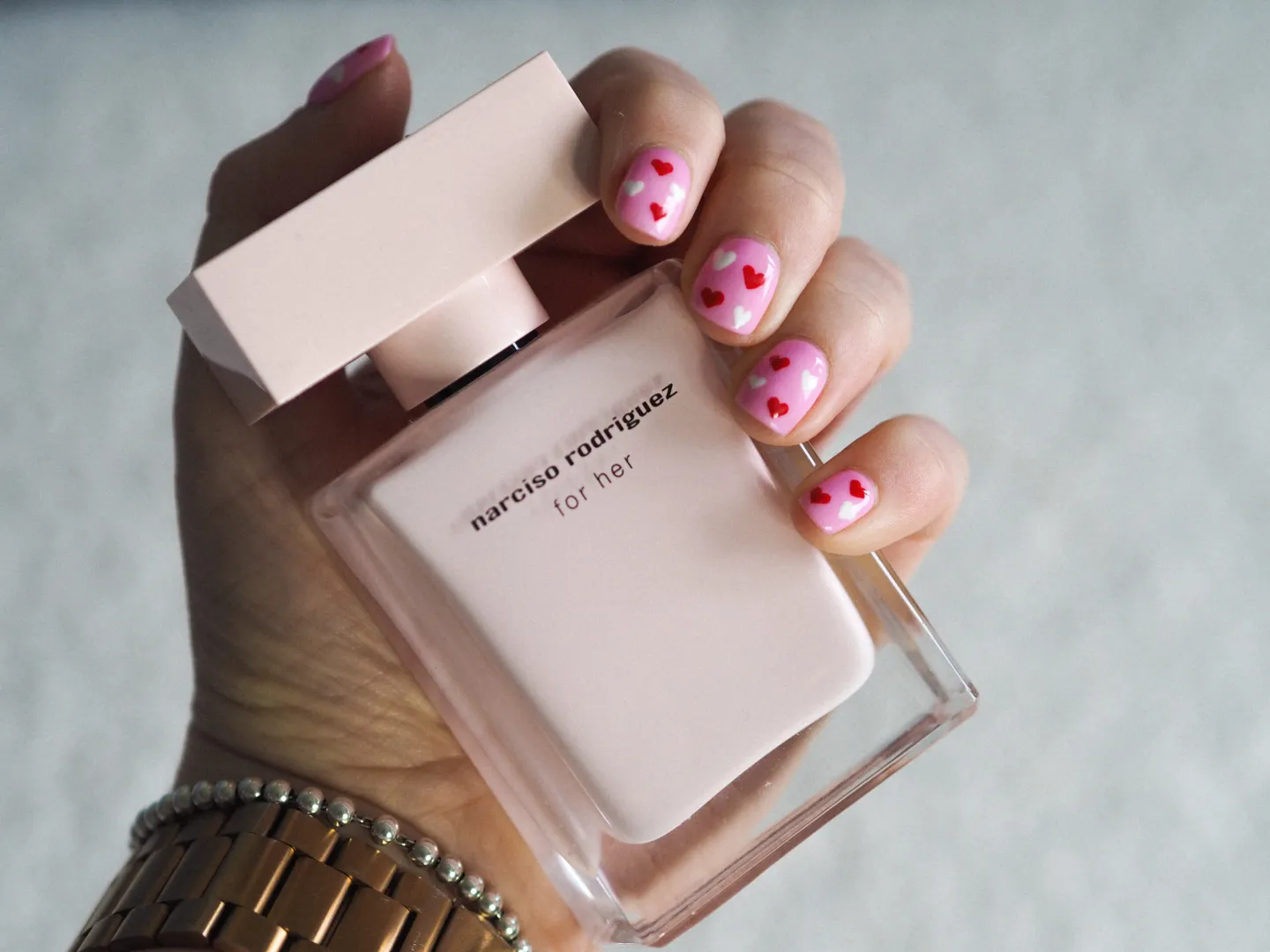
Choosing a Narciso Rodriguez Fragrance for Winter
Which Narciso Rodriguez should you actually buy for winter? Not “what smells nice in the bottle” — which one will still be noticeable six hours in when it’s 30°F outside?
I’ve worn NR fragrances across multiple seasons for years. The brand’s musk-forward DNA is genuinely polarizing in cold weather: some of the line projects beautifully when temperatures drop, lasting longer and opening up more completely. Others become nearly invisible within two hours of stepping outside.
Here’s what actually works.
Why Cold Air Changes How Narciso Rodriguez’s Musk Behaves
Cold weather slows down how fragrance molecules evaporate from your skin. That sounds like it would kill performance — and sometimes it does. But for musk-heavy compositions like NR’s lineup, cooler air can actually improve the base notes because they’re not competing with rapid top-note volatility. The composition stays more balanced for longer.
The catch: NR’s signature “clean musk” style depends on skin warmth to bloom properly. When you’re layered under wool and the temperature is sub-freezing, your skin surface has almost no exposed area to radiate fragrance from. This is why a scent that smells lush inside a warm store becomes a whisper twenty minutes later outside.
What this means for application
Apply to pulse points that retain warmth even in winter — inner wrists, neck, and the inside of your elbows. The back of your hands, where most people habitually spray, loses heat fast and kills projection almost immediately in cold air.
Concentration matters more in winter than most people realize. NR spans from EDT (roughly 5-8% aromatic compounds) to EDP (closer to 15-20%). In warm weather, ambient heat does the diffusion work for you. In January, going any lower than EDP concentration often means you’ll be the only one smelling it all day. NR’s style is already skin-close and intimate by design — that’s a strength in heat. In real cold, that intimacy can feel like wearing nothing at all.
The projection paradox in winter
Here’s something that surprised me: Narciso Rodriguez Musc Noir EDP ($110/50ml) actually projects better in cold weather than in summer. When it’s hot, the top notes evaporate so fast that the base becomes smothering. In winter, the whole composition stays more balanced — the rose and woody notes coexist with the musk rather than getting steamrolled by heat diffusion. Not every NR scent does this. It depends on the specific formula architecture and how the base notes are weighted.
Lighter, more sheer constructions like For Her EDT don’t benefit from this effect at all. They just evaporate faster than the cold can do anything interesting with them.
The 3 NR Fragrances That Actually Hold Up in Winter
Out of nine mainstream NR releases I’ve tested across seasons, three genuinely perform in cold weather. Here’s the case for each.
Musc Noir EDP — the strongest winter argument
This is the NR I reach for most between November and February. Musc Noir EDP opens with a dark, slightly smoky rose note — very different from the soft powdery florals you’d expect from this brand. The woody amber base is denser than anything else in the collection, and it wears with actual presence rather than NR’s typical intimate skin-close style.
Longevity runs 8-10 hours on my skin in cold conditions, which is genuinely impressive for a brand usually known for close-to-skin wear. Projection is moderate — not a room-announcer, but definitely noticeable to anyone within arm’s reach throughout the day. Both Sephora and Nordstrom carry testers, so you can properly test it before committing.
One honest caveat: Musc Noir is polarizing. The dark rose plus musk combination reads as intense and slightly unisex to some noses. Sample it before buying a full bottle. I’ve recommended it to three friends — one loved it immediately, one needed a second try, one passed entirely.
All of Me EDP — for warmth without intensity
All of Me EDP ($130/50ml) sits in a completely different register. The dominant notes are iris and a softly soapy warm musk — think cashmere sweater translated into fragrance form. It projects less aggressively than Musc Noir, with longevity closer to 6-7 hours in cold weather, but it layers beautifully under winter clothing without ever turning sharp or overwhelming.
This is the better pick if you run warm, if you’re sensitive to heavy musks, or if you need something that works cleanly across a full week — office through evening without adjustment. It’s also the most crowd-pleasing option in the NR winter lineup. Nobody is ever going to find All of Me offensive.
Narciso EDP (white bottle) — the reliable starting point
The original Narciso EDP ($105/50ml, the opaque white bottle) is the safest bet if you’re new to the brand and buying specifically for winter. Soft floral musk with a light woody base, versatile enough for casual and professional settings, wearable across a wide temperature range. Not exciting, but consistently pleasant and three years of owning a bottle hasn’t changed my answer on this.
If someone asked me which NR to try first for cold-weather wear, this is what I’d hand them.
Generic tip: Don’t spray fragrance on your winter coat as a way to boost projection. Fabric holds scent differently than skin — you lose the warmth-driven diffusion, and you’ll get a flat, one-dimensional version of the scent all day instead of the layered development that makes these fragrances worth wearing. Apply to skin only.
Two NR Fragrances to Skip Until Spring
Narciso Rodriguez For Her EDT ($85/50ml) disappears within 90 minutes in cold weather. The EDT concentration combined with the sheer, airy musk formula means it simply cannot survive winter conditions — I’ve tested this repeatedly across different days and temperatures. For Her Pure Musc ($110/50ml) has the same problem: the stripped-down “pure” formula is luminous in summer heat and nearly invisible in December. Both are excellent fragrances. Buy them in March, not now.
Application Techniques That Make a Real Difference in Cold Weather
These apply to any NR you choose — not just the three winter picks above.
Moisturize before you spray
Dry winter skin absorbs fragrance faster and holds it for less time. Apply an unscented lotion or body oil to your pulse points 10-15 minutes before spraying. The fragrance molecules bind to the surface oils rather than getting immediately drawn into dry skin. On most people, this adds a measurable 1-2 hours of longevity with no other changes.
Increase your spray count
Two sprays of an EDP is enough in summer. In winter, three to four sprays is completely normal — you’re compensating for cold-air suppression of evaporation. Inner wrists, neck, inside of the elbows. In heated indoor environments, the back of the knees is a surprisingly effective spot because floor-level heating vents push warm air upward.
Don’t rub your wrists together
Rubbing crushes the top notes and accelerates breakdown of the fragrance structure. In cold weather this matters even more — you’re already fighting suppression from the temperature. Spray and let it sit.
Musc Noir vs. All of Me: The Winter Side-by-Side
If you’re choosing between these two — the most common NR winter dilemma — here’s the honest breakdown:
| Attribute | Musc Noir EDP | All of Me EDP |
|---|---|---|
| Price (50ml) | $110 | $130 |
| Character | Dark rose, smoky woody musk | Iris, warm soapy musk |
| Winter projection | Moderate-strong | Soft-moderate |
| Longevity in cold | 8-10 hours | 6-7 hours |
| Best occasions | Evenings, weekends, dates | Office, daily wear, casual |
| Polarizing factor | High — intense and unisex-leaning | Low — universally approachable |
| Who should skip it | People sensitive to heavy musk | Anyone wanting noticeable winter presence |
Musc Noir wins on longevity and projection. All of Me wins on versatility and safety. The choice comes down to whether you want something that makes an impression or something that works quietly and reliably all week. Both are genuinely good. Neither will disappoint in cold weather the way the EDT options do.
Three Mistakes That Lead to Wasted Money on NR in Winter
I’ve made all three of these, which is the only reason I’m confident enough to flag them now.
Trusting warm-weather reviews without seasonal context
Most fragrance reviews on Fragrantica, Reddit, and YouTube are written indoors or in temperate conditions. When someone says For Her EDT “lasts all day,” they mean in a 68°F office in April. Cold-weather performance is almost never specifically tested or disclosed. Read those reviews knowing that limitation — they’re useful for scent profile, useless for winter longevity claims.
Sampling inside a heated store and deciding immediately
Sephora runs at around 72°F. You spray Musc Noir on your wrist, it smells incredible under store lights, you hand over your credit card. Twenty minutes later you’re outside in 35°F and it’s a fraction of what it was inside the store. If you can, spray at the counter and then walk outside for 20-30 minutes before deciding. That’s the actual performance test. Most people skip this step and regret it.
Buying EDT over EDP to save the $20 difference
For Her EDT runs about $85 for 50ml. For Her EDP is around $110 for the same size. A $25 difference sounds minor until winter, when that gap separates two hours of noticeable wear from six. The EDT isn’t a bad fragrance — it’s the wrong tool for cold-weather conditions. Spending $85 on something you can’t smell outdoors is a worse deal than spending $110 on something that lasts all day.
Generic tip: If you’re buying NR as a winter gift for someone else, always choose EDP over EDT. EDT requires knowing your own skin chemistry and temperature conditions to work well. As a gift with no such certainty, it carries too much risk of underperforming.
Which NR to Buy Based on Your Situation
Here’s the straight answer:
- First NR purchase, cold climate, daily wear: Narciso EDP, white bottle ($105/50ml). Reliable, versatile, universally wearable. Start here before going deeper into the line.
- Want evening presence and can handle intensity: Musc Noir EDP ($110/50ml). Sample it first — the dark rose is genuinely polarizing — but if it works on your skin, it’s the best winter performer in the entire NR collection.
- Prefer softer scents or need office-appropriate daily wear: All of Me EDP ($130/50ml). Warm iris-musk that works from 9am through evening without adjustment or complaint.
- Already own For Her EDT and wondering why it disappears in winter: Upgrade to For Her EDP. You’ll recognize the DNA immediately but it’ll survive a winter commute and then some.
- Considering For Her Pure Musc for winter: Don’t. Beautiful fragrance. Invisible in December. Save it for July.
Worth saying plainly: if you want serious cold-weather projection and you’re open to going outside NR entirely, Maison Margiela Replica By the Fireplace ($175/100ml) and Le Labo Santal 33 ($198/50ml) are built for winter in ways NR’s skin-close musk style simply isn’t designed to compete with. NR’s strength has always been intimate, close-to-skin wear. In deep winter, that intimacy trades projection for subtlety.
If that trade-off suits you — and for a lot of people it genuinely does — Musc Noir EDP is where to start.