Building a Stylish Wardrobe on $100 a Month in 2026
Can you actually look put-together on $100 a month? Yes. But not the way most budget fashion guides tell you to do it.
I’ve been working within a strict clothing budget for four years. The biggest lesson: it’s not about spending less — it’s about spending on the right things in the right order. The people who make this work aren’t hunting deals. They’re making deliberate, boring, specific choices every month. Here’s exactly what that looks like.
Where Most People Blow Their Clothing Budget Before Month’s End
Most people don’t have a spending problem. They have a buying problem.
Here’s the pattern: someone sets a $100 clothing budget, sees a $20 ASOS haul and thinks they’re winning, then ends up with six random tops that don’t go with anything they already own. By mid-month, the budget’s gone — spent on things they’ll wear twice, maybe.
These are the specific ways money disappears:
- Trend pieces at full price. That $35 ruched mini from Zara in March will be 40% off by May. If you have to have it, wait three weeks.
- Buying singles, not systems. A $25 blazer sounds smart until you realize it only works with the one pair of pants you own. A piece that fits into three existing outfits is worth three times as much as one that doesn’t.
- Ignoring cost-per-wear math. A $12 Amazon Essentials tee worn twice a week costs roughly $0.12 per wear after a year. A $9 Shein top worn once costs $9 per wear. “Cheap” is not the same as inexpensive.
- Duplicating what’s already there. Most people own seven black t-shirts and zero quality trousers. Audit before buying anything.
- Impulse shopping after a hard day. I’ve done this. Everyone has. The cart total never feels real until the package shows up and you have no idea where to put it.
The 20-Minute Audit That Changes Everything
Before spending a dollar this month, pull everything out of your closet. Sort into three piles: wear regularly, haven’t touched in six months, never worn. Donate or sell pile three. List pile two on Poshmark or Depop — even at $5–8 per item, that’s extra budget. Most people discover they need far less than they assumed once they can actually see what they own.
A quick note on platforms: Depop skews younger and works well for branded or vintage pieces. Poshmark has a broader buyer range and performs better for basics and workwear. ThredUp is the easiest option if you just want to box things up and ship them off without negotiating prices.
The “Just One More Basic” Trap
Capsule wardrobe culture has become its own shopping justification. “I just need one more white button-down and the wardrobe is complete.” Then you buy three. Uniqlo Supima Cotton Crew Neck Tees at $15 are legitimately worth having — they last, they wash well, they hold their shape after a year of regular use. The problem isn’t that basics are bad. The problem is using “building a capsule” as a reason to keep spending without tracking what’s actually missing.
Know exactly what gap you’re filling before opening any shopping app. If you can’t name it specifically, you’re browsing, not shopping.
How I Actually Split $100 Every Month
This allocation took two years to settle on. The breakdown below isn’t theoretical — it reflects what actually keeps a real wardrobe functional without funneling money into things that don’t move the needle.
| Category | Monthly Budget | What I’m Buying | Where I Shop |
|---|---|---|---|
| Basics replenishment | $20 | Tees, socks, underwear | Uniqlo, Amazon Essentials |
| One versatile piece | $35 | Trousers, a shirt, light jacket | H&M, Gap Factory, Banana Republic Factory |
| Secondhand wildcard | $25 | Jeans, dresses, outerwear | ThredUp, Depop, local thrift |
| Shoe and accessory upkeep | $10 | Insoles, a belt, minor repairs | Amazon, local cobblers |
| Reserve fund (rolls over) | $10 | Building toward bigger purchases | — |
The reserve fund matters more than it looks. Three months of rolling over $10 is $30 toward a Levi’s 501 ($59.99 retail). Four months gets you within range of an Everlane The Air Shirt ($68). Six months covers most of a quality winter coat from Banana Republic Factory on sale. Saving within your budget is still saving — it just requires patience.
The “versatile piece” slot is where discipline matters most. Don’t spend that $35 on something interesting. Spend it on something functional. A well-fitting pair of chinos from Gap Factory (usually $29–39 on sale) will work with every top you own. An H&M silk-look blouse at $25 goes from office to dinner without changing. That’s the math that needs to work every single month.
On months where you find nothing worth buying — skip it. Roll the whole $100 forward. A $200 month once every two months, spent on two genuinely useful pieces instead of four mediocre ones, builds a better wardrobe faster than spending for the sake of hitting a monthly number.
The 12 Pieces That Make Every Outfit Work
This is the list I’d build from scratch if I had to start over with $100/month spread across several months. Not aspirational. Functional.
The Five You Wear Every Week
- Two plain crew-neck tees — Uniqlo Supima Cotton at $15 each, or Amazon Essentials 2-pack for around $18. One white, one navy or charcoal. These are the workhorses. If you want a thorough breakdown of which Amazon cuts actually hold their shape and don’t shrink in the wash, there’s a no-BS Amazon tee guide that covers the specifics worth knowing before buying.
- One well-fitting pair of jeans — Levi’s 501 or 505 in a medium or dark rinse. Target’s Universal Thread jeans run $25–35 and fit well across sizes if Levi’s isn’t in the budget right now.
- One pair of dark trousers — straight-leg or slim, black or charcoal. Not slacks, not joggers. A clean trouser in a dark neutral goes with almost everything. H&M consistently stocks these for $25–35.
- One button-down shirt — Oxford cloth, white or light blue. Everlane’s The Air Shirt ($68) is worth saving two reserve months for. Gap Factory’s Oxford button-down at $30 is a solid placeholder in the meantime and honestly performs better than its price suggests.
- One solid hoodie — no logo, no graphic, plain. Pullover or zip in grey, black, or navy. The difference between a hoodie that lasts three years and one that pills out after six washes comes down to fabric weight and seam construction — this quality hoodie breakdown covers exactly what to look for before spending.
The Outerwear Question
You need two: a lightweight layer for transitional weather and a real coat for winter. That’s the complete outerwear story on a budget.
For the lightweight layer, H&M blazers in the $35–50 range are consistently underrated and go on sale often. A Levi’s Original Trucker Jacket ($60–80 retail) shows up on ThredUp constantly for $18–25 — this is exactly what the secondhand allocation is designed to catch. Don’t buy it new.
For winter coats: don’t cheap out. A $40 fast-fashion coat will last one season before the lining pulls, the buttons loosen, and the silhouette collapses. Use the reserve fund and wait for Banana Republic Factory’s frequent 50%-off sales — their $180 wool-blend coats regularly drop to $90. That’s four months of reserve saving. Worth it every time over buying two $40 replacements.
Shoes on a Budget That Don’t Fall Apart
Three pairs handles almost every situation: white sneakers for daily wear, a Chelsea boot for anything elevated, and loafers or simple flats for warmer months.
For sneakers: Vans Old Skool ($65) or New Balance 574 ($80). Both are clean enough to dress up, casual enough for everyday, and built to last years with basic care. For boots: ASOS house-brand Chelsea boots run $45–55 and hold up better than their price suggests — the silhouette is clean and the upper doesn’t crack quickly. For loafers: Steve Madden’s GAEL loafer at $60–75 is the most consistently recommended budget option right now, and the leather-look upper ages reasonably well.
Buy one pair per quarter if starting from zero. Rotate all three so none take daily beating — shoes last significantly longer when they dry out fully between uses.
One more piece worth calling out here: a well-chosen cardigan with pockets is one of the most underrated items in a budget wardrobe. It layers over tees, sits under a coat, and adds outfit variation without requiring another dedicated purchase slot.
Thrift vs. Fast Fashion vs. Basics Brands — My Honest Position

Thrift wins for denim and outerwear. Fast fashion wins for almost nothing. Basics brands win for anything you replace on a regular cycle.
That’s the call. Here’s the evidence behind it.
When Secondhand Is the Only Logical Answer
Denim. Levi’s, Wrangler, Lee — they age well, the construction holds up, and they show up constantly in thrift stores and on resale apps. I’ve bought Levi’s 501s for $14 on ThredUp in barely-worn condition. Paying $60 retail for jeans you could find secondhand for $12–18 is genuinely hard to justify unless you need a specific size or inseam that doesn’t exist in the secondhand market.
Same logic for blazers, leather jackets, and winter coats. Vintage construction in these categories often beats modern equivalents at the same price point, and thrift store prices haven’t inflated as badly as Depop’s market for trending vintage pieces. Skip the Depop hype buys. Target the practical stuff no one’s trying to resell at a markup.
Where thrifting consistently fails: anything that sits against skin. Don’t buy someone else’s white tee. Underwear, socks, base layers — always buy new. The hygiene concern is real, and the cost savings are marginal.
Why I Mostly Stopped Buying Shein
The price looks real. The cost-per-wear math isn’t.
A $7 Shein top sounds like budget genius until it’s see-through out of the bag, loses shape after two washes, and photographs badly outside of a staged flat lay. For genuinely one-time pieces — a themed event, a bachelorette weekend where you’ll never wear it again — fine. For anything meant to anchor a real outfit you’ll wear repeatedly, the math falls apart fast.
H&M’s quality is inconsistent, but their plain basics perform better than their trend pieces. Buy the charcoal trousers, not the printed mesh top. Zara’s cuts are still strong; fabric quality has dropped noticeably since around 2022, but a structured Zara blazer at $40 during a sale is still a reasonable find. Uniqlo is the benchmark for everyday basics: Heattech leggings, AIRism underwear, Supima tees — all still going strong in my wardrobe after two-plus years of regular use. That’s the standard everything else should be measured against.
The One Question I Ask Before Every Purchase
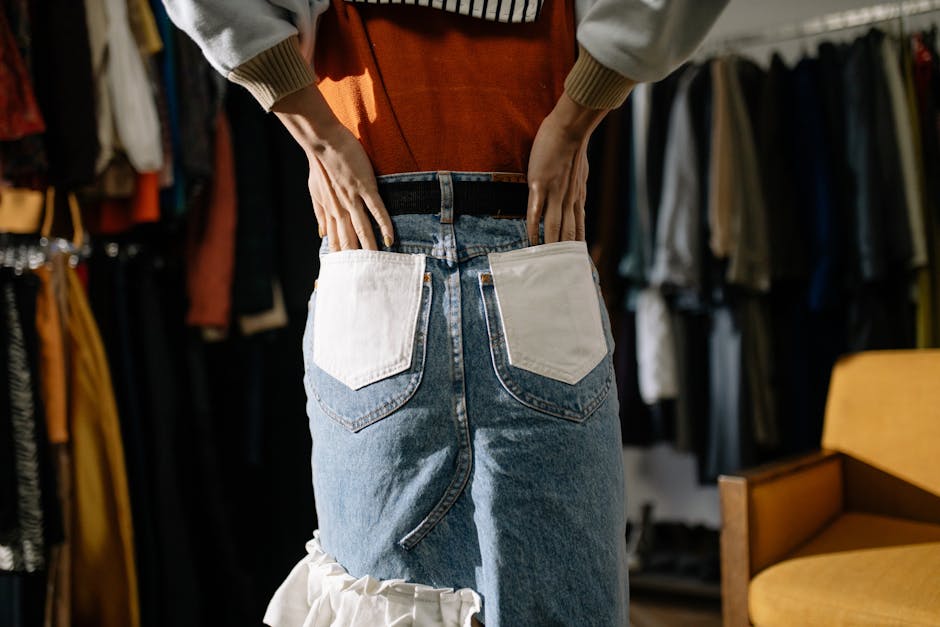
Does this work with at least three things I already own? If I have to pause and actually think about it, the answer is no.
Not because the piece is bad. Because my wardrobe isn’t ready for it yet — and that’s a foundation problem, not a shopping problem. Picture three complete outfits using the item and things already hanging in the closet. If you can’t do it in thirty seconds, put it back. Come back when the foundation is there to support it.
This one filter has stopped more impulse buys than any budgeting app, no-buy challenge, or capsule wardrobe system I’ve tried. It works because it forces specificity. You either know immediately that the piece fits, or you don’t — and “I’ll figure it out” is always a lie you tell yourself in the store.
The most stylish wardrobes built on tight budgets aren’t built on great deals — they’re built on boring, deliberate, specific purchases made one at a time with a clear picture of what’s already in the closet.