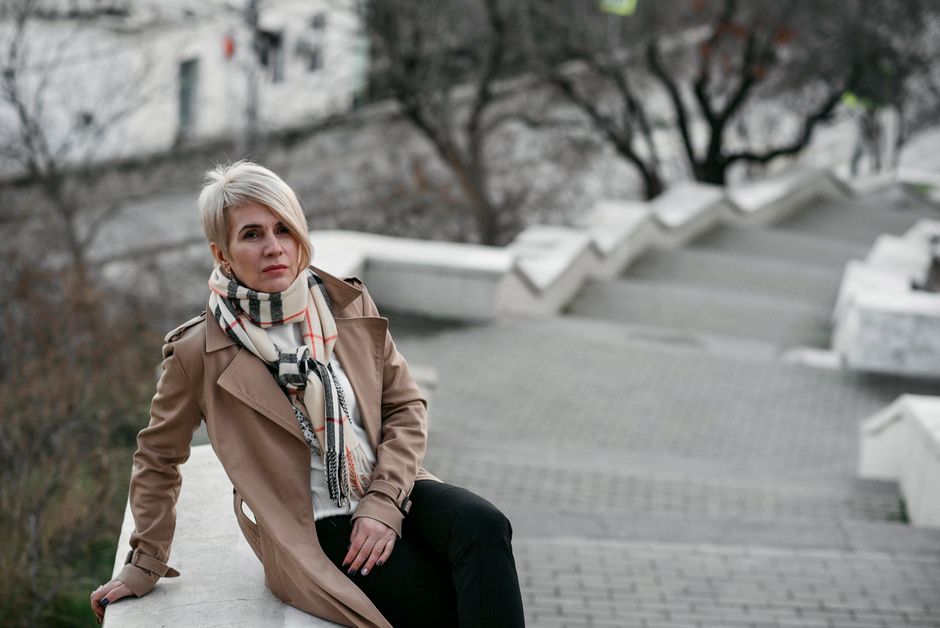
At 7:40 on a cold October morning, your outfit looks fine indoors but fails the moment you step outside: the sweater bunches under the coat, the belt hangs loose, and your shoes cannot handle wet pavement. The fix is not another scarf or a larger size. It is a planned balance of insulation, proportion, and weather protection.
Start with the layers, not the trench coat
Build warmth from thin layers
My verdict: The most reliable autumn and winter trench outfit starts with a close-fitting base layer, a mid-weight knit, and enough room in the coat for both without pulling across the shoulders; a fine merino turtleneck under a cotton shirt gives more usable warmth than one oversized sweater because trapped air between layers insulates your body while the shirt keeps the neckline neat.
Keep the outline clean
Choose one loose piece at a time: pair a relaxed trench with straight-leg trousers, or wear a roomy knit with a neater coat, because oversized clothing at every layer creates bulk at the waist and makes the belt look like an afterthought; leave roughly 5 to 7 cm of cuff visible when the sleeve underneath has a neat finish.
Check the weather honestly
Think like a comparison analyst: a coat has no AM Best rating or J.D. Power score, so judge its real coverage by fabric, lining, closure, and length, while your local climate matters just as much as your wardrobe; premiums vary by state and individual factors, and your trench needs vary by wind, rain, walking time, and indoor heating rather than by a generic seasonal label.
Use this fit test before styling the coat
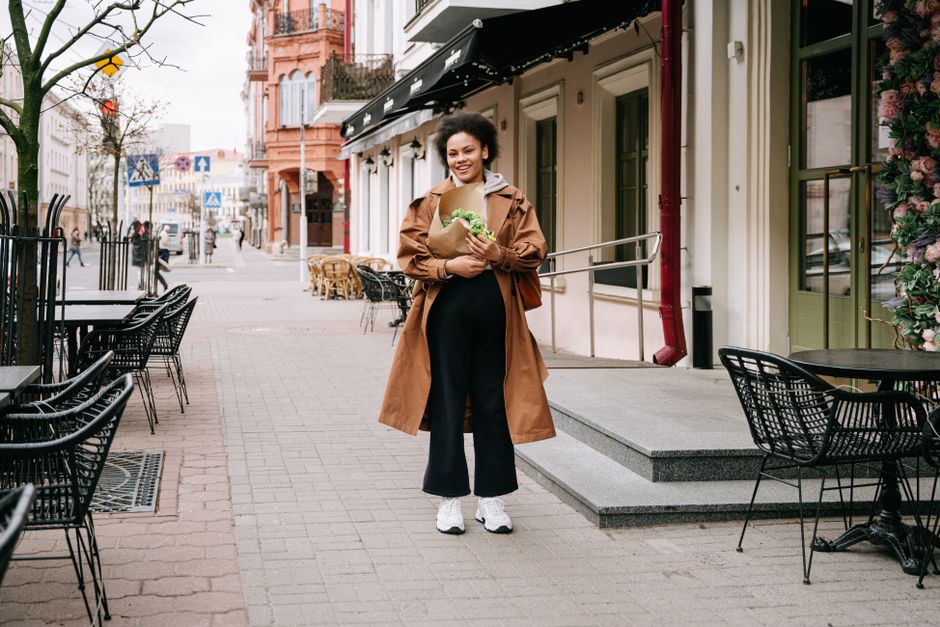
Three-minute mirror test
Wear the thickest layer you expect to use and run this test before deciding on accessories or color.
| Check | Pass standard | Why it matters |
|---|---|---|
| Shoulders | Seam sits close to the shoulder edge without folding | Prevents a stiff, boxy outline |
| Back | You can pinch 2 to 4 cm of fabric without strain | Leaves room for a knit layer |
| Arms | You can cross your arms and raise them to chest height | Tests movement during commuting |
| Hem | Falls between mid-thigh and mid-calf | Balances trousers, skirts, and boots |
| Belt | Closes at the natural waist without digging in | Creates shape without bunching |
Fix the common proportion errors
A trench that ends at the widest part of the calf can make the legs look shorter, especially with flat shoes. A mid-thigh coat works with wide-leg trousers and sneakers, while a longer coat looks sharper with a narrow boot or a shoe with a small heel. If the coat has epaulettes, storm flaps, and large buttons, keep the rest of the outfit quiet; a plain knit and solid trousers let the construction do the work.
Do not size up just to fit one heavy jumper. If the shoulders drop more than about 2 cm past your natural shoulder line, the coat will look borrowed rather than relaxed. A better winter solution is a thinner thermal layer under a medium-weight sweater. The result stays warm without turning the waist and sleeves into one large block.
Five layering rules solve most autumn-to-winter mistakes
Rule 1: Match the fabric to the temperature
For mild autumn days, use cotton, poplin, silk, or fine merino beneath the trench. As temperatures fall, add a thin heat-retaining base layer before reaching for a bulky wool sweater. The trench blocks some wind, but a classic cotton shell is not a substitute for an insulated coat in freezing weather.
Rule 2: Use texture to make neutral colors look intentional
Combine smooth cotton with ribbed wool, brushed flannel, or softly grained leather. A camel trench over a charcoal ribbed knit looks richer than camel over several flat beige pieces. Keep the palette to two neutrals and one accent color, such as camel, black, and burgundy, so the outfit has a clear visual order.
Rule 3: Treat the belt as a styling tool
Tie the belt in a loose knot when walking, buckle it when you need wind protection, or leave it open over a structured outfit. Never let the belt hang unevenly at the sides. If the coat is double-breasted, closing every button can make the torso appear wider; fastening the waist button and leaving the top open often gives a cleaner line.
Rule 4: Protect the feet first
Winter style falls apart when the shoes are too delicate for the route. Choose leather ankle boots, lug-soled loafers, or water-resistant sneakers for wet pavements. Match the shoe weight to the coat length: a long trench needs a grounded shoe, while a short trench can handle a lighter trainer.
Rule 5: Know when not to wear a trench
Skip a traditional trench during heavy snow, freezing rain, or long periods below 5°C unless it has substantial insulation and a high collar. A padded parka or wool coat will keep you warmer. The trench wins for transitional weather, light rain, office commutes, and layered city dressing; forcing it into severe weather is a wardrobe mistake, not a style challenge.
Choose the coat by climate and budget, not the label

The strongest value pick for mild, wet commutes
For a controlled budget, my pick is the Uniqlo Trench Coat at about $129.90 on the US site. Its appeal is practical: a familiar double-breasted shape, recycled-material construction, and a price low enough to leave room for a wool sweater and weather-ready shoes. Style it with a grey merino knit, dark straight-leg jeans, and black ankle boots. This is the right choice for someone who wants one reliable autumn coat and does not need heavy insulation.
The sharper option for a modern capsule wardrobe
The COS Check-detail belted cotton trench coat is listed around $399 in the US, making it a design purchase rather than a basic one. Choose it when the cut matters more than the lowest price. Keep the outfit simple: cream knit, black trousers, and a compact leather bag. For a lower spend with a longer, traditional shape, the Mango Long double-breasted trench coat has appeared around $179.99 on the US site. The Mango coat is my better pick for trend-conscious shoppers who want more structure than a casual jacket without paying designer prices.
| Coat | Listed price | Best use | Trade-off |
|---|---|---|---|
| Uniqlo Trench Coat | About $129.90 | Everyday autumn commuting | Limited warmth in severe winter |
| Mango Long double-breasted trench coat | About $179.99 | Longer, polished city outfits | Check sleeve and hem length carefully |
| COS Check-detail belted cotton trench coat | About $399 | Modern capsule wardrobe | Higher cost for design details |
Prices can change by country, size, promotion, and stock status. The consumer-safe rule is simple: spend more on cut and fabric only when you will wear the coat often enough to justify it.
Which trench coat outfit works for your day?

How should you style a trench coat for work?
Wear a fine knit, a tucked shirt, straight trousers, and a closed trench with the belt tied at the back. This keeps the front clean while the waist still has shape. Choose black, navy, grey, or camel when the coat must work with several office outfits. The COS option earns its higher price here because a sharper cut can replace a blazer on mild days, but the Uniqlo coat gives the stronger value if you already own tailored trousers and polished shoes.
How do you style a trench coat casually?
Use a sweatshirt or striped knit, relaxed jeans, and clean leather sneakers. Push the sleeves slightly to show the cuff, then leave the trench open so the casual layer remains visible. The Mango long coat works well with this formula because the longer hem gives basic denim a more deliberate shape. Avoid pairing a very oversized hoodie with a very loose trench; choose one relaxed item and keep the other close to the body.
What should you wear with a trench coat in winter?
For cold days, add a thin thermal top, a fine wool turtleneck, opaque tights or warm trousers, and ankle boots. Fasten the coat at the waist and add a wool scarf inside the collar to reduce drafts. If you still feel cold after adding those layers, switch to an insulated coat. The final test is the same as the opening scenario: you should be able to walk outside, move your arms, and arrive warm without the coat fighting your outfit. For mild rain and changing autumn temperatures, the Uniqlo Trench Coat is the clear value choice; for a sharper wardrobe with frequent wear, the COS coat is the stronger style investment.