
Layering Essentials: Build Cozy Fall Outfits From Basics
Cozy fall outfits do not require five bulky sweaters. The real trick is controlling thickness, texture, and warmth in the right order. Start with a close-fitting base, add one insulating layer, then finish with a roomy outer layer that can handle wind or rain. That simple sequence gives you more combinations, fewer overheated moments, and clothes that still look polished indoors.
Why good fall layering starts with less fabric
My verdict: build warmth from thin layers instead of buying one oversized sweater. Layering works because each garment handles a different job. The first layer manages sweat and keeps fabric from rubbing against your skin. The middle layer traps warm air. The outer layer blocks wind, light rain, or cold seats on a morning commute. When one thick piece tries to do all three jobs, it usually feels hot inside, cold outside, or awkward under a coat.
Use the thin-to-thick order
Put the smoothest and thinnest item closest to your body. A fitted long-sleeve shirt or thin turtleneck should sit under a shirt, cardigan, or light sweater. The middle layer can have more texture because it does not need to slide under another sweater. Your final layer needs the most room through the shoulders and upper arms.
Keep the visual weight moving outward. A thin neckline, medium-weight knit, and structured jacket look balanced because each layer is easy to identify. Three pieces with the same thickness create a stiff, crowded shape.
Leave room for movement
Check the armholes before buying. Raise both arms, cross them, and sit down. If the base layer pulls at the shoulders or the outer layer cuts into your armpits, the outfit will feel wrong after ten minutes. Aim for about 1 inch of extra room at the chest in a fitted middle layer and closer to 2 inches in a jacket worn over a sweater.
Choose texture with purpose. Cotton feels familiar but can stay damp after a long walk. Wool adds warmth without much bulk. Smooth synthetic fabric dries faster and works well for active commutes. The best fall wardrobe uses all three instead of treating one fiber as the answer to every weather problem.
How to assemble a warm outfit in five steps

Use this five-step order when you are standing in front of a full closet and still have nothing to wear. It keeps the process practical and makes each piece earn its place.
- Read the forecast. Check the morning and afternoon temperatures, wind, and rain. A 55°F day with strong wind needs a different outfit from a calm 55°F day.
- Pick the base by activity. Choose a close-fitting long sleeve for walking, a breathable cotton tee for a short indoor day, or a thin turtleneck when you want a clean neckline under a cardigan.
- Add one visible middle layer. Use a button-down shirt, cardigan, vest, or lightweight sweater. Let one hem, cuff, or collar show. Too many visible edges make the outfit look accidental.
- Choose the outer layer by exposure. A denim jacket works for dry weather. A wool coat handles cold air better. A water-resistant shell wins when rain matters more than structure.
- Finish with one grounding item. Straight-leg jeans, a long skirt, or trousers give the upper layers a clear base. Add socks and shoes that match the weight of the clothes above them.
Before leaving, remove one item and look in the mirror. If the outfit still feels warm enough, it probably has better proportions. The goal is not maximum clothing. It is the smallest set of layers that keeps you comfortable through the entire day.
A simple temperature map
| Outdoor condition | Base | Middle | Outer layer |
|---|---|---|---|
| 60–65°F, dry | T-shirt or thin long sleeve | Open shirt or light cardigan | Optional denim jacket |
| 50–59°F, breezy | Fitted long sleeve | Merino sweater or cardigan | Trench or lined jacket |
| 40–49°F, cold | Thermal or fine-knit base | Wool sweater | Wool coat or insulated jacket |
Use the map as a starting point, then adjust for how much you walk and how warm your home or office runs. Indoor heating is why removable middle layers matter.
What makes a layered outfit look bulky?
The fastest fix for a bulky fall outfit is to reduce overlap at the waist and shoulders. Most bad layering comes from poor proportions, not from wearing too many clothes. A long shirt under a cropped sweater can bunch at the waist, while a tight jacket over a thick knit makes the shoulders look square. Keep one area relaxed and the other controlled: a loose jacket over a slim base, or a fitted jacket over a thin sweater.
Should every layer be the same length?
No. Matching hems can make the outfit look stiff. A small difference of 1 to 3 inches gives the eye a clear order. Let a shirt hem peek below a sweater, or keep the base hidden and show only the collar and cuffs. Avoid five separate hems ending at different points across the hips; that creates visual noise.
How do you stop sleeves from bunching?
Choose a base with smooth sleeves and a close cuff. Push the base sleeve slightly above the wrist before adding the middle layer, then pull it back into place. If the sleeve still gathers, the garment is too loose for that combination. A thin knit sleeve usually layers more cleanly than a ribbed or heavily textured one.
When should you skip a layering piece?
Skip the cardigan if the jacket already has insulation and you will spend most of the day indoors. Skip a scarf when the neckline is already high and the coat collar sits close to your face. Skip a long overshirt under a short jacket if the hem creates a sharp horizontal line at the widest part of your hips. Removing one piece often improves both comfort and shape.
Fit matters more than color matching. Neutral colors make mixing easier, but a well-fitted rust sweater with dark navy trousers looks better than a beige outfit built from pieces that pinch, pull, or collapse.
Which layering essentials are worth buying first?

Buy the base layer first, then the middle layer, then shoes or outerwear. That order gives you the most outfits from the smallest budget. Prices below are listed in U.S. dollars and were checked in October 2026; sales and stock can change.
| Piece | Current price | Useful detail | Verdict |
|---|---|---|---|
| UNIQLO HEATTECH T-Shirt | $19.90 | Lightweight, moisture-wicking base for cool commutes | Best first purchase for a small budget |
| UNIQLO Women’s Merino Sweater | $49.90 | Fine merino knit that fits under a jacket | Best everyday middle layer |
| Madewell Merino Wool Collared Cardigan | $138 list price | 100% merino wool with a shirt-like collar | Best for smart-casual outfits |
| Levi’s 501 Original Jeans | $110 | Straight fit and rigid denim structure | Best grounding piece for relaxed layers |
| Dr. Martens 1460 Smooth Leather Boots | $180 | Eight-eye lace-up boot with a sturdy sole | Best for adding weight to soft upper layers |
The strongest starter combination is the UNIQLO HEATTECH base, UNIQLO merino sweater, Levi’s 501 jeans, and a shoe you already own. Add the Dr. Martens 1460 only if you regularly wear ankle boots and want a durable, high-contrast finish. Buy the Madewell cardigan when your wardrobe needs a polished layer for offices, dinners, or travel.
Do not buy all five pieces at once. First check your closet for gaps in weight and length. If you already own several thick sweaters, a thin base will create more outfits than another sweater.
Which fall layers should you skip?
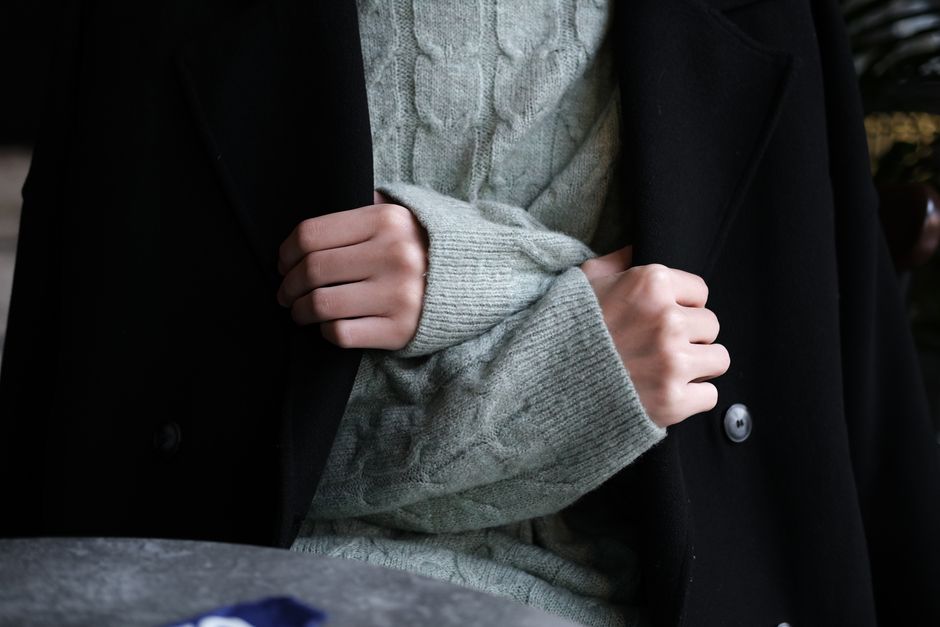
Skip any piece that solves a problem your wardrobe does not have. A trendy oversized shacket is not a smart buy if your jackets already feel tight over sweaters. A chunky turtleneck is the wrong choice if you commute by train and spend most of the day in overheated rooms. A cream sweater may look beautiful, but it needs more care than a darker color and shows makeup, coffee, and rain marks quickly.
Should you buy merino or synthetic fabric?
Choose merino when you want temperature control, low bulk, and a layer that can look polished. Choose synthetic fabric when you sweat heavily, wash clothes often, or need faster drying. Merino costs more and usually needs gentler care. Synthetic fabric handles active use better but can hold odors and may look less refined. For most wardrobes, one of each is a better plan than buying several versions of one fabric.
When should you skip the Levi’s 501?
Skip the Levi’s 501 Original Jeans if you dislike rigid denim or need stretch for long sitting days. The straight shape gives layered outfits a strong base, but the no-stretch feel is not comfortable for everyone. Choose a stretch straight jean or relaxed trouser instead if you need more movement. A pair of jeans is only useful when you will actually wear it through a full day.
When are Dr. Martens 1460 boots the wrong choice?
Skip the Dr. Martens 1460 if you need a light shoe, have no time to break in stiff leather, or walk long distances on hard pavement every day. Their visual weight works best with denim, longer skirts, and substantial outerwear. For a softer outfit, choose a lighter leather ankle boot or sneaker. The best shoe should support the outfit’s proportions without making your feet pay for the styling.
Fall dressing keeps moving toward flexible wardrobes: fewer pieces, more combinations, and fabrics that work across indoor and outdoor temperatures. Once the base, middle, and outer layers each have a clear job, new seasonal trends become optional details instead of expensive emergencies.

How to Build an Athleisure Wardrobe at Target Without Wasting Money
Three pairs of leggings into the cart before you’ve even reached the paper towels. Target’s athleisure section has a gravitational pull that’s hard to explain — and hard to justify when you get home and realize two of those three pairs go sheer during a squat.
This guide is about shopping smart. Specifically at Target, specifically for athleisure — pieces that function during light activity and look intentional the rest of the time.
What Actually Makes Athleisure Work (Most People Get This Wrong)
Athleisure has been miscategorized into uselessness. Half the internet defines it as “workout clothes you can wear outside.” That framing sets people up to buy wrong every single time.
Athleisure works when the clothing fits precisely enough to look intentional — whether it’s oversized or fitted. The moment something reads “I didn’t change after the gym,” you’ve bought activewear, not athleisure. The difference is subtle but visible from across a coffee shop.
Real athleisure pieces do two things well: they don’t restrict movement, and they don’t telegraph effort. A jogger with a clean taper reads like a relaxed choice. A jogger with a sagging crotch and bunched ankle reads like you weren’t paying attention when you got dressed.
Three Use Cases — Pick One Before You Shop
Most people wearing athleisure are doing one of three things: actual light exercise (yoga, walking, low-intensity gym work), casual outings and errands, or working from home. Each use case has different priorities, and Target’s lines are not equally good at all three.
For exercise: you need four-way stretch and moisture-wicking fabric. For errands: you need pieces that look pulled-together — something you’d wear to see someone you know. For WFH: comfort is primary, but “I’d answer the door in this” should still be the threshold.
Knowing your primary use case before you walk in saves you from buying a $22 cotton-modal lounge set for yoga. It won’t survive a downward dog, let alone a full flow class. The fit falls apart, the fabric bunches, and you end up frustrated at a price point that should have been straightforward.
The Squat Test — Non-Negotiable Before Any Legging Purchase
Take any legging into the fitting room. Squat completely. Check three things: does the waistband fold over or roll down? Does the fabric go sheer at the seat? Does the inseam pull or bunch? If yes to any of these — put it back.
This test takes 45 seconds and eliminates more bad purchases than any amount of online research. A legging that passes costs whatever it costs. A legging that fails is expensive at any price.
Target’s Athleisure Lines Compared Side by Side

Target carries five distinct lines that fall under the athleisure umbrella. They are not interchangeable — different quality levels, different intended uses, different construction. Here’s the honest breakdown:
| Brand / Line | Price Range | Best Use Case | Fabric Profile | Verdict |
|---|---|---|---|---|
| All in Motion | $18–$45 | Light workouts, daily wear | 88% polyester / 12% spandex (core pieces) | Best overall — consistent across washes |
| Colsie | $12–$28 | Lounging, WFH, casual comfort | Cotton-modal blend, minimal spandex | Excellent lounge, not a workout pick |
| Wild Fable | $10–$35 | Trend-forward casual pieces | Varies widely — check the tag every time | Inconsistent — shop item by item only |
| Champion (at Target) | $22–$55 | Fleece basics, sweatshirts, shorts | Reverse Weave cotton-poly blend | Reliable for fleece and layering pieces |
| New Balance (at Target) | $28–$60 | Performance-adjacent styled basics | Polyester-spandex blend | Worth it for joggers and pullovers |
All in Motion is Target’s flagship athletic private label — it replaced C9 by Champion in 2026 and has been consistently well-reviewed since. The 7/8 high-rise legging ($24) gets compared to the Lululemon Align constantly. That comparison has limits: the Align uses Nulu fabric, which is lighter and has a different compression feel. But for daily wear that doesn’t involve hot yoga or high-intensity training, All in Motion holds up across repeated washing. That’s the actual benchmark that matters.
Wild Fable is the most unpredictable line on this list. Some pieces are excellent; others pill after two washes. The brand name alone is not a quality signal here — you need to read the fabric tag on each individual item before buying.
Reading a Fabric Tag: The Skill That Prevents Most Buyer Regret
This is the single most useful thing you can do before putting anything athleisure-related in your cart — at Target or anywhere else. Fabric composition determines how a piece moves, breathes, and looks after twenty washes. Ignoring it is how people end up with wardrobes full of things they don’t wear.
Polyester and Spandex — What You Want for Movement
The performance standard: 80–92% polyester with 8–20% elastane or spandex. This ratio gives you four-way stretch, moisture-wicking, and shape retention over time. All in Motion’s core leggings are 88% polyester / 12% spandex. Look for something close to this on any piece you’ll actually move in.
One trap: a high polyester percentage doesn’t automatically equal quality. Weave density matters too. Thin polyester fabric sheers out under stress — which is exactly what the squat test catches. Do the stretch-and-hold check as well: pull the fabric taut and look for transparency. A denser fabric that springs back quickly after you pinch it will last longer, maintain color, and hold opacity through a workout.
Spandex percentage also predicts how well the piece retains its shape over time. Below 8% spandex, most athleisure pieces start to bag out at the knees and seat after ten to fifteen wears. Above 15%, they tend to feel compressive — good for high-intensity activity, less comfortable for all-day casual wear. The 10–12% range is the sweet spot for lifestyle athleisure.
Cotton and Cotton-Modal Blends — What You Want for the Couch
Cotton feels better than polyester at rest. It also absorbs sweat instead of wicking it, gets heavy and cold when wet, and takes significantly longer to dry. Modal — a semi-synthetic fabric derived from beech trees — improves on this. It’s lighter, has more drape, and feels softer against skin. But without spandex in the blend, it stretches out permanently over time.
Colsie’s ribbed sets are mostly cotton-modal. That’s why they feel genuinely great for WFH and feel genuinely awful for a workout. The marketing uses “athleisure” loosely here — these are lounge clothes. Buy them as lounge clothes and they’re excellent value at $22–$28 a set. Buy them expecting performance and you’ll be disappointed by the first hour of real activity.
What “Buttery Soft” and “Brushed” Actually Mean
These are surface texture descriptors, not durability claims. Brushed polyester has a softer hand feel because the surface fibers have been mechanically raised — it doesn’t make the fabric stronger or more pill-resistant. What actually predicts pilling: fabric weight and spandex content. Heavier fabric creates less friction between fibers during wear and washing. More spandex means better fiber recovery, which reduces pilling over time.
You won’t find grams-per-square-meter listed on Target’s tags. Feel the difference instead: thicker fabric that snaps back firmly when you pinch it is denser and will last longer. A fabric that feels thin and pillowy when compressed is likely to fuzz out quickly.
When Target Athleisure Is the Wrong Answer

Running more than 30 minutes, doing hot yoga, or training for anything with real intensity? Skip Target entirely. Nike Dri-FIT, Lululemon, and Gymshark are built for output — repeated high-impact stress, sustained heat, and moisture management at levels Target’s lines aren’t designed to handle. The fabric breakdown shows up fast when you push it past lifestyle use.
That’s not a criticism of Target. It’s a category distinction. Buy Target athleisure as lifestyle clothing and it’s one of the best values available at that price point. Buy it expecting performance-grade durability under real athletic load and you’ll be replacing pieces inside six months.
How to Style Target Athleisure for Five Real Situations
“Pair leggings with a flowy top” is not a styling tip. Here’s what actually works, situation by situation:
Casual Errands
All in Motion 7/8 high-rise legging ($24) + Champion Reverse Weave crewneck ($40) + clean court sneaker. The crewneck is structured enough to read intentional. The sneaker does the heavy lifting — a worn-down running shoe with leggings reads gym-to-grocery. A New Balance 574 or a clean Air Force 1 reads casual-deliberate.
Add one non-athletic accessory: a structured tote, a simple gold hoop, a cap that isn’t race merchandise. That single item shifts the outfit’s read from “forgot to change” to “chose this.”
Work-From-Home Video Calls
Colsie ribbed tank ($14) under a zip-up or structured cardigan. The ribbed texture photographs better than jersey on camera — it has visual interest without looking busy. Neutral colorways only. Bright Colsie pieces read pajamas in a way that sage, charcoal, and taupe don’t.
Weekend Brunch
Wild Fable flare legging ($22) + fitted bodysuit + oversized blazer. The flare legging becomes a trouser substitute. The blazer frames the whole thing as a deliberate choice rather than an afterthought. This is a real outfit, not a workaround — it works because the proportions are intentional.
Travel Days
All in Motion tapered jogger ($28) + New Balance Athletics pullover ($38) + slip-on sneakers. Comfortable enough to sleep in on a long flight, put-together enough for a hotel lobby. Stay in one color family — all black, all navy, or a neutral tonal range — so it reads considered rather than grab-and-go.
Fall and Winter Layering
All in Motion fleece-lined legging ($30) under an oversized coat with ankle boots. The legging stands in for trousers. This only works with a fitted silhouette — a relaxed jogger under a coat reads shapeless. The ankle boot signals that this is an outfit, not a comfort situation.
The Target Athleisure Pieces That Actually Hold Up

These are the buys worth making. Everything else requires an individual fabric check before committing.
- All in Motion High-Rise 7/8 Legging — $24: 88% polyester / 12% spandex, wide no-roll waistband, available XS–4X. The most consistently reviewed piece in Target’s entire athleisure range. Not a Lululemon Align replacement in terms of fabric feel — but a legitimate daily-wear legging at a fraction of the price. Passes the squat and stretch tests reliably.
- All in Motion Seamless Sports Bra — $18–$22: Low to medium support, no chafing seams, consistent sizing once you know your range. Size up if you’re between sizes — the seamless fabric runs slightly small. Best paired with the 7/8 legging for a no-think morning outfit.
- Champion Reverse Weave Crewneck — $40–$45 at Target: Heavier cotton-poly construction than standard fleece. Resists shrinking in the dryer. The horizontal Reverse Weave construction reduces stretch distortion after washing — this is the detail that separates it from generic sweatshirts at the same price point. A buy-once, wear-for-years piece.
- All in Motion Tapered Jogger — $28: Two side pockets, one zip back pocket, tapered ankle. The taper is the key spec here — straight-leg joggers from Target tend to run boxy and lose shape over time. This silhouette holds its line through repeated wear.
- Colsie Ribbed Short Set — $22–$28: Not a workout set. A lounge set that’s polished enough for WFH and low-key errands. The ribbed texture gives it more structure than jersey, which makes it photograph better and read less casual in person. Stick to the neutral colorways.
- New Balance Athletics Pullover — $38–$42 at Target: Slightly heavier fabric than the All in Motion pullovers, which means better shape retention across more wears. The solid colorways are clean and versatile. The colorblocked versions divide opinion enough that they’re only worth buying if you specifically want that look.
One consistent skip: Wild Fable’s synthetic spandex-blend trend pieces. Quality is variable enough that the brand name isn’t a reliable signal. If you see a specific Wild Fable piece you want, check the tag — 80%+ polyester with 10%+ spandex and a squeeze test that shows good density means it might hold up. Otherwise, the All in Motion line is where Target has actually invested in construction quality.
Start with All in Motion, check the spandex percentage, do the squat test — that three-step filter will serve you better than any product list.