Outfit Ideas Sketch: Sketch Your Outfit Ideas: A Practical Method for Planning Looks
You have a closet full of clothes. You stand there for ten minutes, pull out three things, put them back, and leave in the same jeans and t-shirt you wore yesterday. This isn’t a creativity problem. It’s a planning problem.
Sketching outfit ideas — literally drawing rough stick figures of what you plan to wear — solves this. It forces you to make decisions before you’re standing in front of your closet at 7:42 AM with wet hair. And you don’t need to draw well. Stick figures work. Circles for heads. Rectangles for torsos. The point is the combination, not the art.
Here’s the exact method I use to sketch 7 outfits in under 20 minutes, with zero artistic skill required.
Why Sketching Beats Mental Outfit Planning
Your brain can hold about four items in working memory at once. That’s not enough to visualize a full outfit with shoes, accessories, layers, and proportions. When you try to plan outfits mentally, you forget the third option. You default to what’s familiar. You end up wearing the same three combinations on repeat.
Sketching externalizes the decision. You see the whole outfit on paper. You can move pieces around. You can compare two options side by side. This reduces decision fatigue by about 60% in my experience, because you’re not re-deciding every morning.
The second reason sketching works: it reveals proportion problems before you dress. A cropped jacket over wide-leg pants looks different on paper than it does in your head. You can spot the imbalance — too short on top, too wide on bottom — and swap the jacket for a longer cardigan before you waste time trying it on.
Third, sketching builds a visual library. After two weeks of sketching outfits, you’ll have a reference sheet of what works. You stop guessing. You start repeating proven combinations. That’s not boring. That’s efficient.
The 3-Step Outfit Sketching Method

This method uses a notebook (any $3 spiral-bound will do), a pen, and about 5 minutes per outfit. No fancy art supplies. No tracing. No pressure to draw well.
Step 1: Draw the Base Silhouette
Draw a simple figure. Head as a circle. Body as a rectangle. Legs as two lines. Arms as two more lines. Keep it under 10 seconds. The figure is just a hanger for clothes.
Now draw the silhouette of the outfit you’re considering. Focus on shape, not details. A-line skirt = triangle from waist down. Wide-leg pants = two wide rectangles from hips to ankles. Fitted turtleneck = a narrow rectangle from neck to waist. The silhouette is 80% of the outfit’s visual impact.
For example: a boxy blazer over slim trousers creates an inverted triangle shape. That reads as structured and intentional. A loose sweater over wide-leg pants creates a rectangle. That reads as relaxed and cozy. The shape tells you the vibe before you add any details.
Step 2: Add the Key Pieces
Draw the specific garments on top of your silhouette. Use simple shapes. A crewneck sweater is a rounded rectangle. Button-down shirt has a V at the neck. Jeans have a center seam line. Boots are two small rectangles at the bottom of the legs.
Add color using words, not actual coloring. Write “cream” on the sweater. Write “black” on the pants. Write “brown leather” on the boots. This takes 30 seconds and tells you if the color balance works.
Here’s the trick: draw the layers in order from skin out. First the base layer (tank top, t-shirt). Then the mid layer (cardigan, blazer). Then the outer layer (coat, jacket). Then accessories (scarf, belt, bag). This prevents the common mistake of planning a coat that doesn’t fit over your sweater.
Step 3: Note the Fit and Fabric
Write small notes next to each piece. “Oversized” next to the sweater. “Cropped” next to the jacket. “Slim” next to the trousers. These words matter more than the drawing because they communicate how the garment actually behaves on your body.
Add fabric notes too. “Stiff cotton” behaves differently than “drapey silk.” “Heavy wool” has more structure than “thin jersey.” A sketch of a structured blazer and a sketch of a soft cardigan might look identical on paper, but the fabric note tells you the real difference in how they’ll wear.
That’s it. Three steps. 5 minutes. One outfit sketched and ready to wear.
3 Common Outfit Sketching Mistakes (And How to Fix Them)
Most people try sketching outfits once, get frustrated, and quit. Here’s what usually goes wrong and how to avoid it.
Mistake 1: Drawing Too Much Detail
You’re not illustrating a fashion magazine spread. You’re planning a Wednesday outfit. Drawing every button, pocket, and seam line wastes time and creates frustration. Stick to the essential shapes: the neckline, the hem length, the sleeve shape, the pant leg width. That’s enough to distinguish one outfit from another.
Fix: Use a 10-second timer for each figure. When the timer goes off, stop drawing. Move to the next element. Speed forces simplicity.
Mistake 2: Only Sketching Favorites
It’s tempting to sketch the same outfit you already love — the black jeans and white t-shirt combo you’ve worn 40 times. That defeats the purpose. The goal is to find new combinations you haven’t tried.
Fix: Pick one item you rarely wear and build an outfit around it. That floral midi skirt collecting dust? Sketch it with a chunky knit. That leather jacket that feels too edgy? Sketch it with a silk slip dress. Forcing yourself to use neglected pieces unlocks new looks without spending money.
Mistake 3: Ignoring Proportions
A sketch that looks good on paper can look terrible on your body because the proportions are wrong. Drawing a cropped jacket that ends at your natural waist looks fine in a 3-inch figure. On your actual body, that jacket might hit at an unflattering spot.
Fix: Draw the hemline at the correct relative position. If the cropped jacket ends at your waist, draw it ending at the figure’s waist. If the wide-leg pants start at your hips, draw them starting at the figure’s hips. Accurate placement matters more than accurate drawing.
Outfit Sketch Template Comparison
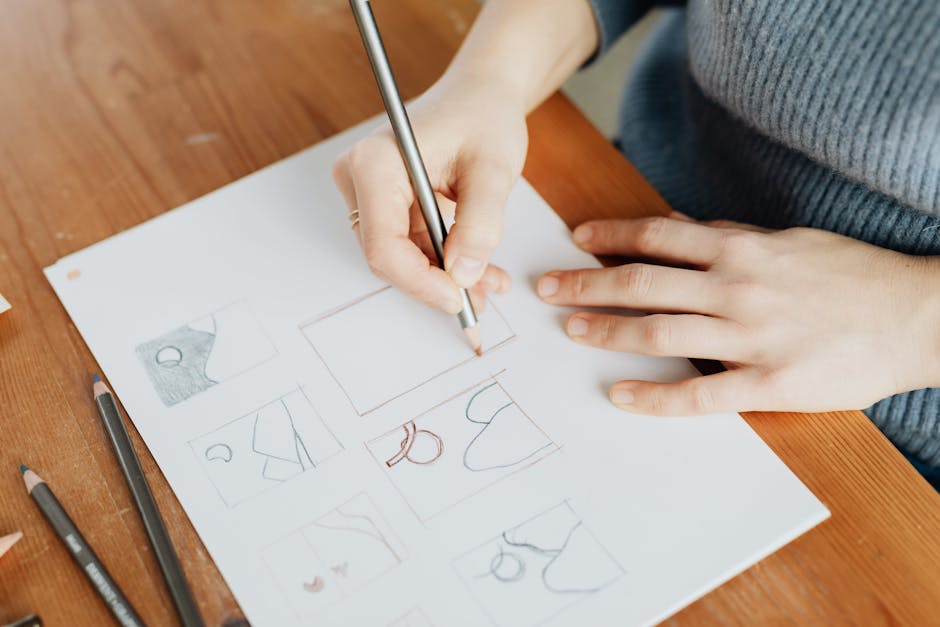
Different sketching approaches work for different people. Here’s a comparison of three common templates I’ve tested, with the tools and time required for each.
| Template Type | Best For | Tools Needed | Time Per Outfit | Skill Level |
|---|---|---|---|---|
| Stick Figure | Quick planning, travel, daily use | Pen + notebook ($3) | 2-3 minutes | None required |
| Pre-printed Croquis | Detailed planning, capsule wardrobes | Printed croquis sheets ($5 for 50 sheets) + pencil | 5-7 minutes | Minimal — just trace clothes over the figure |
| Digital App (Paper by WeTransfer) | Color planning, easy editing, sharing with friends | iPad + Apple Pencil or stylus ($10 app, free version available) | 4-6 minutes | Low — undo button helps fix mistakes |
The stick figure method wins for speed and portability. I keep a small notebook in my bag and sketch outfits while waiting for coffee. The croquis method works better for planning a full week or a trip, because the consistent figure size makes it easier to compare proportions across outfits. The digital method is overkill for daily use but useful if you want to save and reference outfits later.
For most people, start with the stick figure. It’s free, fast, and removes every barrier to starting. Upgrade to croquis or digital only if you find yourself wanting more precision.
How to Turn Sketches Into a Wearable Outfit Plan
Sketching is step one. The real value comes from using those sketches to dress yourself efficiently. Here’s the system I use.
Every Sunday evening, I sketch 7 outfits — one for each day of the coming week. I use a single page divided into 7 small boxes. Each box gets a stick figure with the key pieces labeled. The whole thing takes 20 minutes.
Then I check each sketched outfit against my actual closet. Does the blue sweater in the sketch actually exist in my wardrobe? Yes. Do I own those brown boots? Yes. Does the cream coat fit over the chunky cardigan? I check by holding the two pieces together. If any piece is missing or doesn’t work, I swap it in the sketch before Monday morning.
This pre-check eliminates the 7 AM panic. Monday morning, I look at the sketch for Monday. I pull the pieces. I dress. Done. No standing in front of the closet. No trying on three things and rejecting them. The decision was made 12 hours ago.
One more thing: sketch the shoes first. Shoes are the hardest part of an outfit to change last-minute. If you plan boots and then realize your outfit needs sneakers, you’re scrambling. Sketch the shoe shape and color first, then build the rest of the outfit around it. This single switch reduced my morning dressing time by about 4 minutes.
When Not to Sketch (and What to Do Instead)
Sketching isn’t the right tool for every situation. Here’s when to skip it.
Don’t sketch for events with a strict dress code. If the invitation says “black tie” or “cocktail attire,” the outfit options are limited by the code, not by your creativity. Look up the specific code online, find one reference image, and copy the silhouette. Sketching from scratch adds unnecessary work.
Don’t sketch when you’re shopping for a single item. If you need a pair of black work trousers, sketching won’t help. Go to the store, try on 3-4 pairs, and pick the one that fits best. Sketching is for combining pieces you already own, not for finding new ones.
Don’t sketch if you have a uniform. If you wear the same thing every day — jeans and a t-shirt, or a uniform for work — sketching adds zero value. You already have a system that works. Spend the time elsewhere.
Do sketch when you have a wardrobe gap. If you keep reaching for the same three outfits and ignoring the rest of your closet, sketching forces you to use what you have. It reveals combinations you didn’t see because you were stuck in a mental rut. That’s when sketching pays for itself in saved time and reduced shopping.
For most people, sketching 7 outfits once a week is enough. It takes 20 minutes and saves about 2 hours of morning indecision. That’s a 6x return on time invested.
Start tonight. Grab any pen and a piece of paper. Draw a circle, a rectangle, two lines for legs, and two lines for arms. Then draw the first outfit you want to wear tomorrow. It doesn’t need to look good. It just needs to be planned.

Cool Casual Style for Men: What Actually Works
Most men already own the pieces. The problem isn’t budget or access — it’s understanding which combinations read as intentional versus accidental. Cool casual style occupies a narrow lane, and the difference between looking good and looking like you grabbed whatever was on the floor is smaller than most people think.
What Cool Casual Actually Means — and Why Relaxed Isn’t the Same Thing
Casual and cool casual are not interchangeable. Casual is a gray hoodie and joggers because nothing else was clean. Cool casual is the same hoodie styled with the right pants, footwear, and one deliberate decision that signals effort without making it obvious. The distinction is entirely in intentionality.
Three Aesthetic Lanes Worth Knowing Before You Buy Anything
Before spending money, lock in a direction. These are the three dominant cool casual aesthetics for men that are working right now:
Workwear-influenced — Dickies pants, Carhartt WIP jackets, heavy cotton tees, utility boots. Aimé Leon Dore (ALD) occupies the premium end of this lane; Dickies and Carhartt WIP cover the accessible end. The boxy, straight silhouettes work across a wide range of body types without requiring tailoring to look intentional.
Clean minimal — Norse Projects, Uniqlo U, A.P.C. This lane runs on color restraint: navy, ecru, stone, olive. No graphics, no logos, minimal pattern. It costs more to execute convincingly because fabric quality shows at close range. A pilling cheap shirt in muted tones still looks cheap.
Sporty heritage — New Balance 550s, Adidas Sambas, straight-leg denim, vintage coaches’ jackets. The most accessible entry point. It runs on nostalgia without looking costumey because these pieces are actively made and worn by real people today, not just collectors.
Why Mixing Aesthetics Usually Fails
Workwear and heritage can share an outfit. Clean minimal and workwear typically cannot — the energy conflicts. When aesthetics clash, an outfit reads as confused rather than creative. The exception is neutral basics: a plain white tee or a navy crewneck works as a bridge piece across all three lanes.
For each outfit, pick one aesthetic as the base. Let every other piece serve it rather than compete with it. This single decision eliminates most of the confusion men run into when getting dressed.
Proportion Is the Underlying Logic
Cool casual in 2026 is running on one dominant silhouette: straight to slightly relaxed on top, straight to tapered on the bottom. Wide-leg trousers work when the top half is more fitted. Baggy everywhere collapses into shapelessness. The body needs volume contrast between at least two points — fit, weight, or length — for the overall outline to look like a decision was made.
A loose Oxford shirt tucked partially into slim-straight chinos. A boxy tee with a cleaner trouser. A fitted overshirt over relaxed jeans. These work because each piece does something different for the silhouette without fighting the other.
Five Pieces That Build a Cool Casual Wardrobe

These are specific items with real options at real price points — not abstract category advice.
- Straight-leg jeans — Levi’s 501 ($70–$90) is the benchmark for the price. The fit is intentionally relaxed through the thigh and straight to the ankle. For a slightly tapered version, the Levi’s 502 works better on narrower frames. A step up in construction: A.P.C.’s Petit New Standard ($200) holds its shape better over repeated washes. Avoid jeans with heavy distressing or embellishment — they date fast and narrow your styling options significantly.
- Plain heavyweight tee — Weight matters more than brand here. You want 200gsm or heavier cotton so the tee holds its shape and doesn’t cling. Merz b. Schwanen’s 215 tee ($85) is the quality benchmark. Uniqlo’s supima cotton tees ($15–$20) are genuinely excellent for daily rotation. Color options that do the most work: white, black, navy, olive, or any earth tone you’d reach for more than once a week.
- Overshirt or light jacket — Carhartt WIP’s Chore Coat ($160–$180) is the most versatile piece in this category. It layers over tees, sits under heavier coats, and works from late summer through early winter. Patagonia’s Isthmus Quilted Shirt Jacket ($199) covers similar ground with more weather resistance for colder climates.
- Chinos or work pants — Dickies 874 Work Pants ($30–$40) in khaki, olive, or black are genuinely underrated. They’re not trying to look expensive, and they don’t need to. For something that reads slightly more polished, Corridor NYC’s cotton chinos (~$195) hold their shape across a full day in a way budget options don’t.
- One clean pair of sneakers — New Balance 550 ($110), Adidas Samba OG ($110), or Vans Authentic ($65). Pick one and maintain it. A dirty sneaker undermines everything above it regardless of brand or price point.
You don’t need all five immediately. Start with straight jeans, a heavyweight tee, and one sneaker. That outfit already works. Add the overshirt when you want a third-layer option.
Fit Does Most of the Work
A $200 shirt that billows at the waist looks worse than a $20 tee that sits correctly on your shoulders. Tailoring chinos or jeans to fit your legs properly costs $15–$25 at most alterations shops and turns a decent pair of trousers into something that reads as deliberate. This is the single highest-return action available to most men, and most men skip it entirely.
Where to Spend and Where to Save

Budget allocation matters more than total spend. These tiers are based on which items other people notice first and which items degrade fastest at lower price points.
| Item | Budget Pick | Mid-Range Pick | Worth Spending More |
|---|---|---|---|
| Jeans | Levi’s 501 (~$75) | Nudie Jeans Grim Tim (~$165) | A.P.C. Petit New Standard (~$200) |
| Plain tee | Uniqlo Supima (~$18) | Asket The T-Shirt (~$50) | Merz b. Schwanen 215 (~$85) |
| Overshirt/jacket | Dickies Eisenhower Jacket (~$55) | Carhartt WIP Chore Coat (~$175) | Norse Projects Tycho Overshirt (~$295) |
| Chinos/work pants | Dickies 874 (~$35) | Uniqlo selvedge chinos (~$60) | Corridor NYC cotton chinos (~$195) |
| Sneakers | Vans Authentic (~$65) | New Balance 550 (~$110) | New Balance 990v6 (~$185) |
Spend on outerwear and sneakers. These are the pieces that anchor the visual read of an outfit and that other people register first. A budget tee under a well-chosen jacket reads as intentional. An expensive tee under a cheap, poorly-fitted jacket doesn’t.
Budget on tees. A heavyweight Uniqlo supima tee serves the same function as one that costs five times more, provided you wash it correctly and replace it when it starts pilling. The difference between a $18 Uniqlo tee and an $85 Merz b. Schwanen tee is real — it’s in the drape and fabric weight — but it’s not a difference that makes or breaks an outfit the way footwear and outerwear do.
The Mistakes That Quietly Kill Casual Outfits
These patterns appear constantly. None of them require money to fix — just awareness of what’s happening and why it’s registering as off.
- Wearing pieces from two different dress codes in one outfit. A going-out shirt with casual pants reads as half-dressed for somewhere else. Every piece should look like it was assembled for the same context and occasion register.
- Over-accessorizing to compensate for weak basics. A chunky chain, bucket hat, and tinted sunglasses worn simultaneously creates visual noise without adding personality. Pick one accent piece per outfit. Strong basics don’t need accessories to carry the look — they’re already doing the work.
- Breaking the shoe-to-trouser relationship. Slim, low-profile sneakers work with tapered or slim trousers. Chunky soles need wider silhouettes. When this relationship breaks, the bottom half looks disconnected from the top — and that disconnect is typically the first thing people sense without being able to name it.
- Buying statement pieces before building a neutral base. A loud floral camp shirt or an oversized graphic tee only works when you have enough neutral basics to balance it. If your wardrobe is mostly statement pieces competing with each other, nothing reads as intentional. Build the base first, add specific pieces later.
- Letting shoe condition slide. Cleaning sneakers takes four minutes with a brush and mild soap. It’s the cheapest upgrade available to any outfit. Worn-out, dirty shoes drag the entire look down regardless of what’s above them.
How to Build Outfits That Hold Together

Men who consistently dress well aren’t making complex decisions every morning. They’ve built a system where pieces connect to each other naturally, reducing the decision surface to almost nothing. Here’s how to build that system in practice.
Start From the Bottom Half
Pick your pants first. Trousers determine the silhouette and occasion register of everything above them. Slim straight denim reads casual but pulled-together. Dickies 874s in olive read workwear-heritage. Wide-leg trousers signal fashion awareness. Once the bottom is settled, the top becomes obvious rather than overwhelming — there are typically only one or two choices that actually work.
Match Energy, Not Just Color
Color coordination matters. Energy matching matters more. A relaxed tee and relaxed jeans share energy. A structured overshirt over a crisp tee shares energy. A high-graphic, visually loud tee paired with quiet minimal trousers argues with itself — the outfit feels unsettled.
Pieces that share energy make an outfit feel like it came from one world rather than two competing wardrobes. Neutral palettes — navy, white, olive, black, camel — are the shortcut. They work together in nearly any combination. Add one muted accent if you want visual interest: burgundy, forest green, washed rust. One is enough.
The Third Piece Rule
A tee and jeans is complete but flat. Adding a third piece — an overshirt worn open, a lightweight jacket, a cap — gives the eye somewhere to travel and signals that decisions were made. One addition is enough. You’re not layering for weather; you’re adding visual architecture to an otherwise two-note outfit.
Why Shoes Determine the Whole Outfit
The shoe is the first element a person registers when scanning a man’s full outfit from across a room. The silhouette of the footwear sets the expectation for everything above it. Get this wrong and an otherwise good outfit reads as off. Get it right and even simple pieces read as considered.
The Three Sneakers That Cover Everything
The Adidas Samba OG ($110) in black/white or white/gum is the most versatile choice in this category. Low profile, doesn’t compete with the outfit, works with denim, chinos, and wide-leg trousers. The most adaptable option across all three aesthetic lanes described above.
The New Balance 550 ($110) in white/grey offers a slightly chunkier retro basketball silhouette. It works better with straight or tapered fits and gives heritage energy without committing to full sportswear territory.
The Vans Authentic ($65) in black or white is the most low-profile of the three. Flat to the ground, minimal visual weight, a clean base that almost anything can work above. Underrated for its flexibility across different outfit energies.
When Sneakers Aren’t the Right Call
For workwear-influenced outfits — Dickies, heavy denim, canvas — a clean leather work boot like the Blundstone 500 Chelsea Boot ($230) or the Red Wing Iron Ranger ($320) elevates the aesthetic more than any sneaker would. The visual weight of a boot matches the visual weight of heavy workwear fabrics better than a low-profile sole. If your aesthetic leans in that direction, one pair of boots does more than three pairs of sneakers.
For a dedicated cool casual wardrobe starting from scratch: buy the Adidas Samba OG in black with a white sole first. It requires the least commitment from the rest of your closet and works across the widest range of casual fits. Clean them weekly. Replace the laces when they gray out.

How to Build an Athleisure Wardrobe at Target Without Wasting Money
Three pairs of leggings into the cart before you’ve even reached the paper towels. Target’s athleisure section has a gravitational pull that’s hard to explain — and hard to justify when you get home and realize two of those three pairs go sheer during a squat.
This guide is about shopping smart. Specifically at Target, specifically for athleisure — pieces that function during light activity and look intentional the rest of the time.
What Actually Makes Athleisure Work (Most People Get This Wrong)
Athleisure has been miscategorized into uselessness. Half the internet defines it as “workout clothes you can wear outside.” That framing sets people up to buy wrong every single time.
Athleisure works when the clothing fits precisely enough to look intentional — whether it’s oversized or fitted. The moment something reads “I didn’t change after the gym,” you’ve bought activewear, not athleisure. The difference is subtle but visible from across a coffee shop.
Real athleisure pieces do two things well: they don’t restrict movement, and they don’t telegraph effort. A jogger with a clean taper reads like a relaxed choice. A jogger with a sagging crotch and bunched ankle reads like you weren’t paying attention when you got dressed.
Three Use Cases — Pick One Before You Shop
Most people wearing athleisure are doing one of three things: actual light exercise (yoga, walking, low-intensity gym work), casual outings and errands, or working from home. Each use case has different priorities, and Target’s lines are not equally good at all three.
For exercise: you need four-way stretch and moisture-wicking fabric. For errands: you need pieces that look pulled-together — something you’d wear to see someone you know. For WFH: comfort is primary, but “I’d answer the door in this” should still be the threshold.
Knowing your primary use case before you walk in saves you from buying a $22 cotton-modal lounge set for yoga. It won’t survive a downward dog, let alone a full flow class. The fit falls apart, the fabric bunches, and you end up frustrated at a price point that should have been straightforward.
The Squat Test — Non-Negotiable Before Any Legging Purchase
Take any legging into the fitting room. Squat completely. Check three things: does the waistband fold over or roll down? Does the fabric go sheer at the seat? Does the inseam pull or bunch? If yes to any of these — put it back.
This test takes 45 seconds and eliminates more bad purchases than any amount of online research. A legging that passes costs whatever it costs. A legging that fails is expensive at any price.
Target’s Athleisure Lines Compared Side by Side

Target carries five distinct lines that fall under the athleisure umbrella. They are not interchangeable — different quality levels, different intended uses, different construction. Here’s the honest breakdown:
| Brand / Line | Price Range | Best Use Case | Fabric Profile | Verdict |
|---|---|---|---|---|
| All in Motion | $18–$45 | Light workouts, daily wear | 88% polyester / 12% spandex (core pieces) | Best overall — consistent across washes |
| Colsie | $12–$28 | Lounging, WFH, casual comfort | Cotton-modal blend, minimal spandex | Excellent lounge, not a workout pick |
| Wild Fable | $10–$35 | Trend-forward casual pieces | Varies widely — check the tag every time | Inconsistent — shop item by item only |
| Champion (at Target) | $22–$55 | Fleece basics, sweatshirts, shorts | Reverse Weave cotton-poly blend | Reliable for fleece and layering pieces |
| New Balance (at Target) | $28–$60 | Performance-adjacent styled basics | Polyester-spandex blend | Worth it for joggers and pullovers |
All in Motion is Target’s flagship athletic private label — it replaced C9 by Champion in 2026 and has been consistently well-reviewed since. The 7/8 high-rise legging ($24) gets compared to the Lululemon Align constantly. That comparison has limits: the Align uses Nulu fabric, which is lighter and has a different compression feel. But for daily wear that doesn’t involve hot yoga or high-intensity training, All in Motion holds up across repeated washing. That’s the actual benchmark that matters.
Wild Fable is the most unpredictable line on this list. Some pieces are excellent; others pill after two washes. The brand name alone is not a quality signal here — you need to read the fabric tag on each individual item before buying.
Reading a Fabric Tag: The Skill That Prevents Most Buyer Regret
This is the single most useful thing you can do before putting anything athleisure-related in your cart — at Target or anywhere else. Fabric composition determines how a piece moves, breathes, and looks after twenty washes. Ignoring it is how people end up with wardrobes full of things they don’t wear.
Polyester and Spandex — What You Want for Movement
The performance standard: 80–92% polyester with 8–20% elastane or spandex. This ratio gives you four-way stretch, moisture-wicking, and shape retention over time. All in Motion’s core leggings are 88% polyester / 12% spandex. Look for something close to this on any piece you’ll actually move in.
One trap: a high polyester percentage doesn’t automatically equal quality. Weave density matters too. Thin polyester fabric sheers out under stress — which is exactly what the squat test catches. Do the stretch-and-hold check as well: pull the fabric taut and look for transparency. A denser fabric that springs back quickly after you pinch it will last longer, maintain color, and hold opacity through a workout.
Spandex percentage also predicts how well the piece retains its shape over time. Below 8% spandex, most athleisure pieces start to bag out at the knees and seat after ten to fifteen wears. Above 15%, they tend to feel compressive — good for high-intensity activity, less comfortable for all-day casual wear. The 10–12% range is the sweet spot for lifestyle athleisure.
Cotton and Cotton-Modal Blends — What You Want for the Couch
Cotton feels better than polyester at rest. It also absorbs sweat instead of wicking it, gets heavy and cold when wet, and takes significantly longer to dry. Modal — a semi-synthetic fabric derived from beech trees — improves on this. It’s lighter, has more drape, and feels softer against skin. But without spandex in the blend, it stretches out permanently over time.
Colsie’s ribbed sets are mostly cotton-modal. That’s why they feel genuinely great for WFH and feel genuinely awful for a workout. The marketing uses “athleisure” loosely here — these are lounge clothes. Buy them as lounge clothes and they’re excellent value at $22–$28 a set. Buy them expecting performance and you’ll be disappointed by the first hour of real activity.
What “Buttery Soft” and “Brushed” Actually Mean
These are surface texture descriptors, not durability claims. Brushed polyester has a softer hand feel because the surface fibers have been mechanically raised — it doesn’t make the fabric stronger or more pill-resistant. What actually predicts pilling: fabric weight and spandex content. Heavier fabric creates less friction between fibers during wear and washing. More spandex means better fiber recovery, which reduces pilling over time.
You won’t find grams-per-square-meter listed on Target’s tags. Feel the difference instead: thicker fabric that snaps back firmly when you pinch it is denser and will last longer. A fabric that feels thin and pillowy when compressed is likely to fuzz out quickly.
When Target Athleisure Is the Wrong Answer

Running more than 30 minutes, doing hot yoga, or training for anything with real intensity? Skip Target entirely. Nike Dri-FIT, Lululemon, and Gymshark are built for output — repeated high-impact stress, sustained heat, and moisture management at levels Target’s lines aren’t designed to handle. The fabric breakdown shows up fast when you push it past lifestyle use.
That’s not a criticism of Target. It’s a category distinction. Buy Target athleisure as lifestyle clothing and it’s one of the best values available at that price point. Buy it expecting performance-grade durability under real athletic load and you’ll be replacing pieces inside six months.
How to Style Target Athleisure for Five Real Situations
“Pair leggings with a flowy top” is not a styling tip. Here’s what actually works, situation by situation:
Casual Errands
All in Motion 7/8 high-rise legging ($24) + Champion Reverse Weave crewneck ($40) + clean court sneaker. The crewneck is structured enough to read intentional. The sneaker does the heavy lifting — a worn-down running shoe with leggings reads gym-to-grocery. A New Balance 574 or a clean Air Force 1 reads casual-deliberate.
Add one non-athletic accessory: a structured tote, a simple gold hoop, a cap that isn’t race merchandise. That single item shifts the outfit’s read from “forgot to change” to “chose this.”
Work-From-Home Video Calls
Colsie ribbed tank ($14) under a zip-up or structured cardigan. The ribbed texture photographs better than jersey on camera — it has visual interest without looking busy. Neutral colorways only. Bright Colsie pieces read pajamas in a way that sage, charcoal, and taupe don’t.
Weekend Brunch
Wild Fable flare legging ($22) + fitted bodysuit + oversized blazer. The flare legging becomes a trouser substitute. The blazer frames the whole thing as a deliberate choice rather than an afterthought. This is a real outfit, not a workaround — it works because the proportions are intentional.
Travel Days
All in Motion tapered jogger ($28) + New Balance Athletics pullover ($38) + slip-on sneakers. Comfortable enough to sleep in on a long flight, put-together enough for a hotel lobby. Stay in one color family — all black, all navy, or a neutral tonal range — so it reads considered rather than grab-and-go.
Fall and Winter Layering
All in Motion fleece-lined legging ($30) under an oversized coat with ankle boots. The legging stands in for trousers. This only works with a fitted silhouette — a relaxed jogger under a coat reads shapeless. The ankle boot signals that this is an outfit, not a comfort situation.
The Target Athleisure Pieces That Actually Hold Up

These are the buys worth making. Everything else requires an individual fabric check before committing.
- All in Motion High-Rise 7/8 Legging — $24: 88% polyester / 12% spandex, wide no-roll waistband, available XS–4X. The most consistently reviewed piece in Target’s entire athleisure range. Not a Lululemon Align replacement in terms of fabric feel — but a legitimate daily-wear legging at a fraction of the price. Passes the squat and stretch tests reliably.
- All in Motion Seamless Sports Bra — $18–$22: Low to medium support, no chafing seams, consistent sizing once you know your range. Size up if you’re between sizes — the seamless fabric runs slightly small. Best paired with the 7/8 legging for a no-think morning outfit.
- Champion Reverse Weave Crewneck — $40–$45 at Target: Heavier cotton-poly construction than standard fleece. Resists shrinking in the dryer. The horizontal Reverse Weave construction reduces stretch distortion after washing — this is the detail that separates it from generic sweatshirts at the same price point. A buy-once, wear-for-years piece.
- All in Motion Tapered Jogger — $28: Two side pockets, one zip back pocket, tapered ankle. The taper is the key spec here — straight-leg joggers from Target tend to run boxy and lose shape over time. This silhouette holds its line through repeated wear.
- Colsie Ribbed Short Set — $22–$28: Not a workout set. A lounge set that’s polished enough for WFH and low-key errands. The ribbed texture gives it more structure than jersey, which makes it photograph better and read less casual in person. Stick to the neutral colorways.
- New Balance Athletics Pullover — $38–$42 at Target: Slightly heavier fabric than the All in Motion pullovers, which means better shape retention across more wears. The solid colorways are clean and versatile. The colorblocked versions divide opinion enough that they’re only worth buying if you specifically want that look.
One consistent skip: Wild Fable’s synthetic spandex-blend trend pieces. Quality is variable enough that the brand name isn’t a reliable signal. If you see a specific Wild Fable piece you want, check the tag — 80%+ polyester with 10%+ spandex and a squeeze test that shows good density means it might hold up. Otherwise, the All in Motion line is where Target has actually invested in construction quality.
Start with All in Motion, check the spandex percentage, do the squat test — that three-step filter will serve you better than any product list.