
Harvard Style Guide: Formatting Rules Most Students Get Wrong
You’ve been told to use the Harvard style guide for your essay. But when you open your university’s PDF, you get a wall of rules about commas, italics, and brackets that make zero sense. Most students lose marks not because they plagiarised, but because they formatted a book title wrong. This guide walks through the exact rules, with examples, so you don’t make those mistakes.
What Is the Harvard Referencing Style — and Why Do Universities Use It?
The Harvard style is an author-date referencing system. It was developed at Harvard University in the 1880s, but it’s not owned by them. Every UK university has its own version. The core idea is simple: you put the author’s surname and the year of publication in parentheses right after you cite a source. No footnotes, no endnotes. The full details go in a reference list at the end.
Universities prefer Harvard because it’s flexible. It works for books, journal articles, websites, and even YouTube videos. The reader can immediately see who wrote something and when, without flipping pages. That’s the entire point.
Here’s the catch: there is no single official Harvard manual. Your university’s version might put a comma after the author’s name, or use italics for journal titles, or skip the place of publication. Always check your department’s specific guide. This article follows the most common UK conventions used by the University of Cambridge and the University of Oxford.
This is not legal advice — consult your university’s official style guide for exact rules.
In-Text Citations: The Two Rules That Trip Everyone Up

In-text citations in Harvard style follow two patterns. Get these right, and you’ve solved half the formatting problems.
Rule 1: Direct quotation with page number
If you quote a source word-for-word, you must include the page number. Example: (Smith, 2019, p. 42). The comma after the author is optional in some guides, but the page number is not. If you leave it out, it looks like you didn’t actually read the book.
Rule 2: Paraphrase without page number
When you rewrite an idea in your own words, you still need the citation, but the page number is optional. Example: (Smith, 2019). Some lecturers want the page number anyway. If you’re unsure, include it. It shows you did the reading.
Common mistake: Students put the full stop before the citation. Wrong. The full stop goes after the closing bracket. Like this: “The study found significant results (Jones, 2026).” Not: “The study found significant results. (Jones, 2026)”
Reference List vs. Bibliography: What’s the Difference?
This is the single most common confusion among first-year students. A reference list includes only the sources you actually cited in your essay. A bibliography includes everything you read, even if you didn’t cite it. Most UK lecturers want a reference list. If they ask for a bibliography, they’ll say so explicitly.
The formatting is identical either way. Every entry follows the same structure: Author, Initials. (Year) Title. Edition (if not first). Place: Publisher.
For a journal article: Author, Initials. (Year) ‘Article title’, Journal Name, Volume(Issue), pp. Pages.
For a website: Author, Initials. (Year) Page title. Available at: URL (Accessed: date).
That’s it. Three templates cover 90% of your sources.
Formatting a Book Reference — The Exact Punctuation
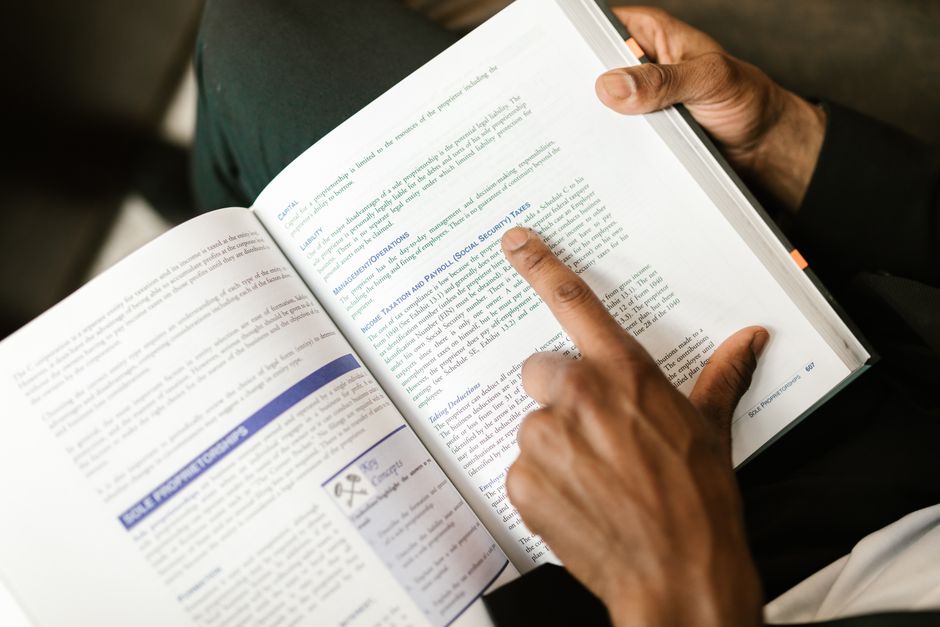
Books are the easiest source type, but the punctuation is strict. Here’s the correct format:
Last name, First initial. (Year) Title in italics. Edition (if not first). Place of publication: Publisher.
Example: Swinton, J. (2018) Understanding dementia. 2nd edn. London: Jessica Kingsley Publishers.
Notice the elements: full stop after year, title in italics, full stop after title, then place, colon, publisher, full stop. The edition goes in parentheses before the place. “2nd edn.” is standard abbreviation. Use “edn.” not “edition”.
Failure mode: Students forget the edition. If you cite the first edition, you still need “1st edn.” in the reference. If you don’t include it, the reader assumes you used the latest edition, which might be wrong.
Journal Article References — Why the Quotation Marks Matter
Journal articles follow a different pattern. The article title goes in single quotation marks with a capital letter only for the first word and proper nouns. The journal title goes in italics with capital letters for every major word.
Format: Author, Initials. (Year) ‘Article title’, Journal Name, Volume(Issue), pp. Page range.
Example: Patel, R. (2026) ‘Cognitive decline in older adults’, Journal of Geriatric Psychology, 34(2), pp. 112–128.
The volume number is not italicised. The issue number goes in parentheses right after the volume. No space between volume and bracket. The page numbers use “pp.” for multiple pages, “p.” for a single page. Use an en dash (–) between page numbers, not a hyphen.
Common error: Students italicise the article title. Don’t. Only the journal name is italicised. The article title gets single quotes. If you reverse them, the reference looks wrong to any experienced marker.
Website References — The Access Date Is Not Optional

Websites are the most variable source type because pages get updated or deleted. Harvard style requires an access date to show when you viewed the page. Without it, the reference is incomplete.
Format: Author, Initials. (Year) Page title. Available at: URL (Accessed: Day Month Year).
Example: NHS (2026) Dementia symptoms. Available at: https://www.nhs.uk/conditions/dementia/symptoms/ (Accessed: 15 March 2026).
If no author is listed, use the organisation name as the author. If no date is listed, use (n.d.) meaning “no date”. Do not make up a date.
When NOT to use a website reference: If the information is also available in a printed book or journal article, cite the print version. Websites are less stable. Lecturers prefer sources that won’t disappear. Use websites only when the information is exclusively online (like a government policy page or a news article).
Common Formatting Errors and How to Fix Them
Based on marking guides from the University of Manchester and the University of Edinburgh, these are the five most frequent mistakes in Harvard references.
| Error | Wrong Example | Correct Example |
|---|---|---|
| Missing edition | Smith, J. (2019) Psychology. London: Sage. | Smith, J. (2019) Psychology. 3rd edn. London: Sage. |
| Italicised article title | Patel, R. (2026) Cognitive decline, Journal of Geriatric Psychology, 34(2), pp. 112–128. | Patel, R. (2026) ‘Cognitive decline’, Journal of Geriatric Psychology, 34(2), pp. 112–128. |
| Full stop before citation | The study found results. (Jones, 2026) | The study found results (Jones, 2026). |
| No access date for website | NHS (2026) Dementia symptoms. Available at: URL | NHS (2026) Dementia symptoms. Available at: URL (Accessed: 15 March 2026). |
| Inconsistent punctuation | Smith, J. (2019) Psychology, London: Sage. | Smith, J. (2019) Psychology. London: Sage. |
The most damaging error is inconsistent punctuation across your reference list. Markers notice when half your entries use a comma after the year and half use a full stop. Pick one format and stick to it for every single entry.
The Single Most Important Rule
Every citation must lead to a complete reference, and every reference must be cited at least once in your text. If you list a book in your reference list that never appears in your essay, it looks like you padded the list. If you mention a source in your essay but don’t include it in the reference list, it looks like you forgot. Cross-check both lists before you submit.